
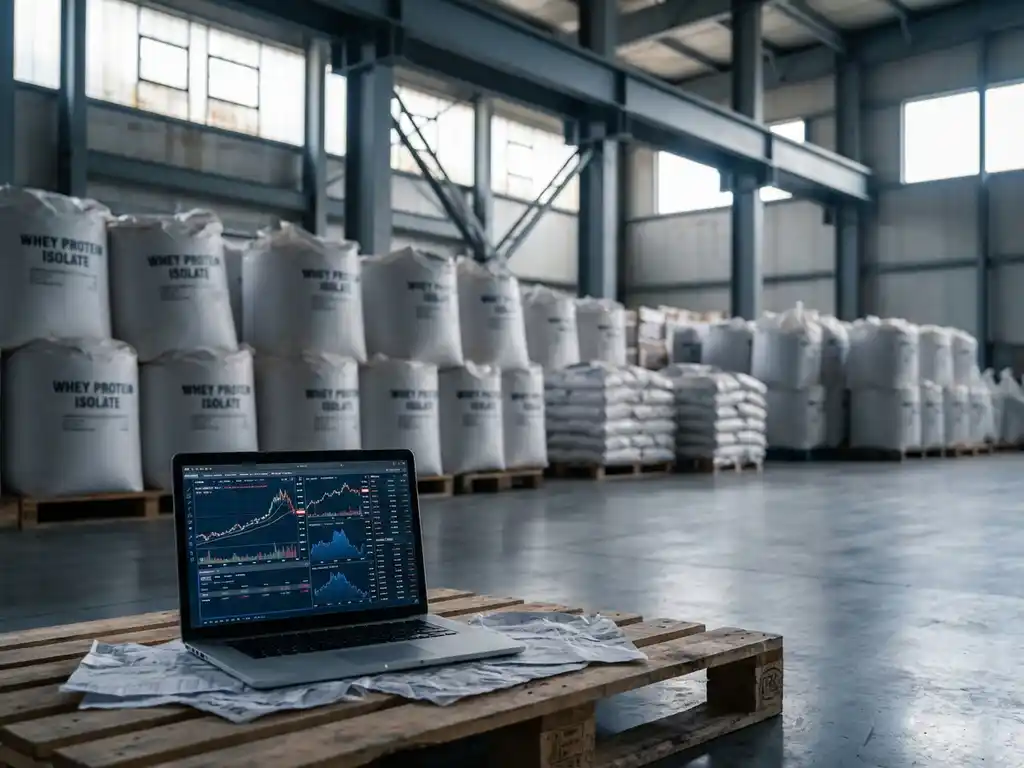
Whey protein prices significantly influence the entire dairy-ingredient trading market through supply-chain interconnections and production economics. Price fluctuations affect trading strategies, contract timing, and inventory decisions across all dairy ingredients. Understanding these market dynamics helps traders anticipate shifts and make informed decisions in volatile commodity markets.
What drives whey protein price fluctuations in the global market?
Whey protein prices fluctuate based on milk supply levels, cheese production volumes, demand from the sports nutrition and food industries, seasonal variations, and broader economic conditions. These interconnected factors create a complex pricing environment in which changes in one area ripple throughout the entire market.
Milk supply forms the foundation of whey protein availability. When dairy farmers increase production due to favourable weather or lower feed costs, more milk enters the system, potentially increasing cheese production and, subsequently, whey protein output. Conversely, drought conditions or high feed prices can reduce milk supply, tightening whey protein availability and pushing prices higher.
Cheese production volumes directly affect whey protein supply since whey is a byproduct of cheese manufacturing. European and American cheese production patterns significantly influence global whey protein availability. When cheese demand increases during holiday seasons or periods of economic growth, more whey becomes available, potentially moderating whey protein prices.
Demand from the sports nutrition and food industries creates additional price pressure. Growing health consciousness and the protein supplement market drive consistent demand growth, while food manufacturers use whey protein for its functional properties in processed foods. This dual demand base supports price stability but also increases competition for available supply.
How do whey protein price changes affect dairy ingredient trading strategies?
Price volatility in whey protein markets forces traders to adapt their contract timing, risk management approaches, and inventory planning strategies. Successful traders monitor spot prices versus forward contracts and adjust their positions based on market conditions and price trends.
Contract timing becomes crucial when whey protein prices show significant volatility. Traders often secure forward contracts during price dips to lock in favourable margins, while avoiding long-term commitments in uncertain market conditions. This approach requires constant market monitoring and quick decision-making.
Risk management strategies include diversifying protein sources, using financial hedging instruments, and maintaining flexible supplier relationships. Many traders spread their exposure across whey protein concentrate, whey protein isolate, and alternative protein sources to reduce dependence on a single commodity’s price movements.
Inventory planning requires balancing storage costs against potential price appreciation. When prices trend upward, holding inventory can be profitable, but storage limitations and quality considerations create practical constraints. Dairy trading software helps traders track these positions and optimize inventory decisions based on real-time market data.
The relationship between spot prices and forward contracts provides trading opportunities. When spot prices exceed forward contract levels, traders can profit from immediate sales while covering positions through longer-term purchases. This arbitrage requires sophisticated position management and market-timing skills.
Why do whey protein prices impact other dairy ingredient markets?
Whey protein pricing influences lactose, milk protein concentrate, and other dairy ingredient prices through shared production processes and supply-chain relationships. These ingredients often compete for the same raw milk supply and processing capacity, creating price correlations across the entire dairy-ingredient complex.
Production economics link these ingredients since they often originate from the same milk-processing facilities. When whey protein prices rise significantly, processors may adjust their production mix to maximize higher-value whey protein output, potentially reducing lactose or other ingredient availability and pushing their prices higher.
Lactose prices, in particular, correlate with whey protein movements since both ingredients come from whey processing. When whey protein demand increases, processors focus on protein extraction, affecting lactose supply and pricing. This relationship creates trading opportunities for those who understand the production economics.
Milk protein concentrate markets also respond to whey protein price changes through substitution effects. When whey protein becomes expensive, food manufacturers may switch to milk protein concentrates for certain applications, increasing demand for—and prices of—these alternative proteins.
Supply-chain relationships amplify these effects since many traders handle multiple dairy ingredients simultaneously. Price changes in one ingredient affect inventory values, margin calculations, and trading strategies across entire product portfolios.
What should dairy traders know about whey protein price forecasting?
Effective whey protein price forecasting requires monitoring milk production data, cheese manufacturing trends, seasonal demand patterns, and economic indicators that influence both supply and demand. Key metrics include milk powder prices, currency fluctuations, and protein demand from major consuming regions.
Seasonal patterns provide reliable forecasting guidance. Milk production typically peaks during spring months in major dairy regions, potentially increasing whey availability during summer processing periods. Holiday seasons often drive increased cheese production, affecting whey protein supply dynamics in predictable ways.
Supply-and-demand fundamentals require tracking global milk production forecasts, cheese consumption trends, and protein market growth rates. Weather patterns in major dairy regions, feed-cost projections, and changes in dairy herd size all influence medium-term supply availability.
Currency fluctuations significantly affect international whey protein trade since most transactions occur in US dollars. European and New Zealand suppliers become more competitive when their currencies weaken, potentially increasing supply and moderating prices. Traders must factor exchange-rate trends into their forecasting models.
Economic indicators such as GDP growth, consumer spending patterns, and food-industry expansion rates help predict demand changes. Recession periods typically reduce sports nutrition spending, while economic growth drives increased food manufacturing activity—both of which affect whey protein consumption patterns.
Understanding these market dynamics is essential for successful dairy-ingredient trading. Modern dairy trading software helps traders track these variables and manage complex positions across volatile commodity markets. The interconnected nature of dairy-ingredient markets requires sophisticated tools and market knowledge to navigate successfully.
For traders looking to improve their market analysis and position management capabilities, professional software solutions can provide the real-time data and analytical tools necessary for informed decision-making. Contact us to learn how specialized trading systems can enhance your market forecasting and risk management approaches in these dynamic commodity markets.
Frequently Asked Questions
How can I start implementing whey protein price monitoring in my dairy trading operations?
Begin by establishing data feeds for real-time whey protein spot prices from major exchanges and setting up alerts for significant price movements. Implement a systematic approach to track milk production data, cheese manufacturing reports, and seasonal demand patterns. Consider investing in specialized dairy trading software that aggregates these data points and provides analytical tools for better decision-making.
What are the most common mistakes traders make when dealing with whey protein price volatility?
The biggest mistakes include over-relying on historical price patterns without considering current market fundamentals, failing to diversify protein sources, and not accounting for currency fluctuations in international trades. Many traders also make the error of holding excessive inventory during uncertain periods without proper risk management strategies in place.
How far in advance can whey protein prices be reliably forecasted?
Short-term forecasts (1-3 months) tend to be most reliable when based on current milk production trends and seasonal patterns. Medium-term forecasts (3-6 months) require careful analysis of cheese demand projections and economic indicators. Beyond six months, forecasting becomes increasingly challenging due to weather variability, policy changes, and unexpected market disruptions.
What specific metrics should I track to anticipate whey protein price movements?
Key metrics include weekly milk production reports from major dairy regions, cheese production volumes, whey protein inventory levels at processing facilities, and spot-to-forward price spreads. Additionally, monitor feed costs (corn and soy prices), weather patterns in dairy regions, currency exchange rates, and sports nutrition market growth indicators.
How do I determine the optimal timing for whey protein forward contracts versus spot purchases?
Compare current forward contract prices to your price forecasts based on supply-demand fundamentals and seasonal patterns. Lock in forward contracts when prices are below your projected fair value and market volatility is high. Use spot purchases when forward premiums are excessive or when you expect near-term price declines due to increased milk production or reduced demand.
What hedging strategies work best for managing whey protein price risk?
Effective strategies include using dairy futures contracts to hedge price exposure, diversifying across different protein types (concentrate vs. isolate), and maintaining flexible supplier relationships across multiple regions. Financial instruments like options can provide downside protection while preserving upside potential. Always match your hedge duration to your actual inventory and contract commitments.
How do I calculate the impact of whey protein price changes on my overall dairy ingredient portfolio?
Use correlation analysis to understand how whey protein price movements affect lactose, milk protein concentrates, and other ingredients in your portfolio. Calculate position-weighted exposure to determine your overall risk level and identify natural hedges within your portfolio. Modern trading software can automate these calculations and provide real-time portfolio risk assessments based on current price movements.