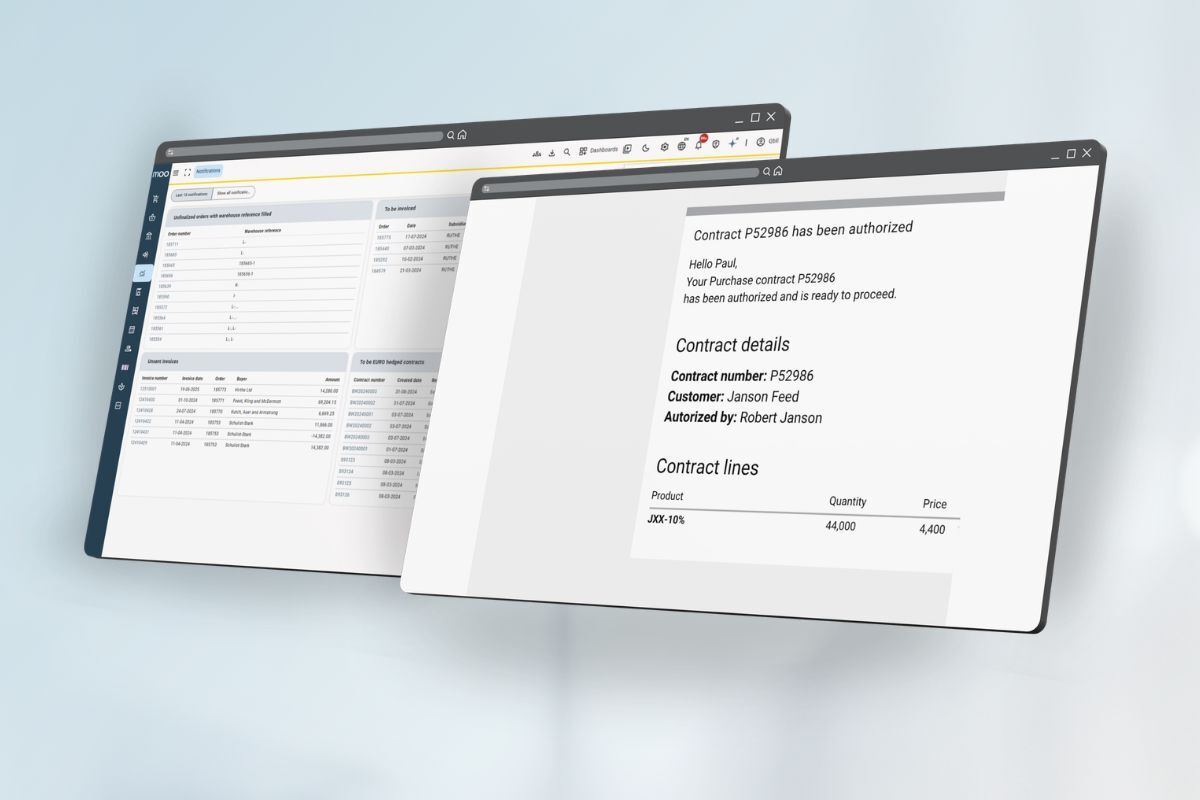

Successful dairy traders invest in operational improvements to maintain a competitive advantage and manage growing business complexity. Modern dairy ingredient trading requires real-time visibility into positions, contracts, and inventory levels—capabilities that manual systems cannot provide. Smart operational investments help traders scale efficiently while reducing costly errors in a high-volume, low-margin business environment.
What drives successful dairy traders to invest in operational improvements?
Market pressures and razor-thin margins drive successful dairy traders to invest in operational improvements. The dairy ingredient trading business operates on margins as low as 1–2%, making accuracy and efficiency critical to profitability. Real-time visibility into buying and selling positions becomes essential when handling multiple contracts for products such as milk powder, whey, and lactose simultaneously.
Competition in the dairy trading sector has intensified significantly. Traders who can respond quickly to market opportunities and provide accurate information to customers gain substantial advantages. When a client needs 100,000 kilograms of milk powder delivered in specific batches, traders must know instantly what is available, what is committed, and what needs to be sourced.
Growth itself creates operational bottlenecks that limit further expansion. Many successful traders start with Excel spreadsheets that work perfectly at smaller volumes. However, as the business grows and complexity increases, manual tracking becomes unreliable and time-consuming. Operational improvements remove these growth constraints, allowing traders to handle larger volumes without proportionally increasing administrative overhead.
The interconnected nature of dairy trading networks adds another layer of complexity. Customers often become suppliers, and suppliers frequently buy other products. Managing these relationships manually becomes increasingly difficult as networks expand and transaction volumes grow.
How do operational improvements actually impact daily trading activities?
Operational improvements transform daily trading by automating routine tasks and providing instant access to critical information. Instead of spending hours updating spreadsheets and cross-referencing contracts, traders can focus on relationship-building and identifying new opportunities. Modern systems handle contract management, order processing, and inventory tracking automatically.
Communication with customers and suppliers becomes more professional and accurate. When a customer calls to ask about delivery schedules or product availability, traders can provide immediate, reliable answers instead of promising to “check and call back.” This responsiveness builds trust and often leads to increased business volume.
Real-time position management eliminates the anxiety many traders experience about their exposure. Knowing exactly how much you have bought versus sold at any moment enables confident decision-making. This visibility is particularly valuable in volatile markets where prices can change rapidly.
Order processing becomes streamlined and error-free. Instead of manually creating purchase orders, delivery schedules, and invoices, integrated systems handle these tasks automatically. This reduces administrative time and eliminates costly mistakes that can occur when managing multiple transactions manually.
Financial integration provides another significant benefit. Automatic synchronisation with accounting systems means financial records stay current without manual data entry. This saves time during month-end processes and provides more accurate financial reporting to support business decisions.
What’s the difference between traders who invest in operations versus those who don’t?
Traders who invest in operational improvements typically achieve better scalability and accuracy than those relying on traditional methods. They can handle larger transaction volumes without proportionally increasing staff, enabling more profitable growth. Their error rates decrease significantly, protecting margins and customer relationships.
Response times to market opportunities differ dramatically between these groups. Traders with modern operational systems can evaluate and respond to opportunities within minutes, while those using manual methods may need hours or days to gather the necessary information. In fast-moving commodity markets, this speed advantage often determines who wins profitable contracts.
Customer service levels vary considerably. Traders with operational improvements can provide professional, accurate responses to customer enquiries immediately. Those without these systems often struggle to provide timely, reliable information, potentially damaging customer relationships and losing repeat business.
Growth patterns show clear differences between these groups. Traders who invest in operations often experience smoother, more predictable growth. They can take on larger contracts and more complex arrangements because their systems can handle the increased complexity. Traditional traders frequently hit growth plateaus when manual methods become overwhelmed.
Risk management capabilities also differ significantly. Modern systems provide alerts about contract deadlines, delivery requirements, and payment terms. Manual systems rely on human memory and paper-based tracking, increasing the risk of missed deadlines and contract violations.
When should dairy traders consider upgrading their operational systems?
Dairy traders should consider upgrading when Excel spreadsheets become difficult to manage or when errors start affecting customer relationships. Common warning signs include spending more than two hours a day on administrative tasks, difficulty tracking multiple contracts simultaneously, or frequently providing inaccurate information to customers about availability or delivery schedules.
Volume thresholds provide clear indicators for upgrading. When handling more than 50 active contracts or processing over £1 million in monthly transactions, manual systems typically become inadequate. The risk of errors increases substantially at these volumes, potentially causing significant financial losses.
Growth ambitions often trigger system upgrades. Traders planning to expand into new products, markets, or customer segments need operational foundations that can support increased complexity. Building these foundations before growth occurs is typically more cost-effective than upgrading during periods of rapid expansion.
Customer expectations also drive upgrade decisions. When customers begin requesting electronic documentation, automated reporting, or integration with their systems, manual operations become a competitive disadvantage. Meeting modern customer expectations often requires operational improvements.
Staff expansion frequently indicates the need for a system upgrade. When considering hiring additional administrative staff to handle operational tasks, investing in ERP software for dairy industry operations often provides better returns. Modern systems can eliminate the need for additional staff while improving accuracy and efficiency.
The timing of the decision depends on business stability and growth trajectory. Traders experiencing consistent growth and stable customer relationships are ideal candidates for operational improvements. Implementation typically takes around two days, making the transition relatively quick and straightforward.
Successful dairy traders recognise that operational improvements are investments in sustainable growth rather than expenses. The combination of improved accuracy, increased efficiency, and enhanced customer service typically generates returns that far exceed implementation costs. For traders ready to scale their operations professionally, exploring modern operational solutions is a logical next step in business development.
Frequently Asked Questions
How long does it typically take to see ROI after implementing operational improvements?
Most dairy traders see positive returns within 3-6 months of implementation. The immediate benefits include reduced administrative time (often 2-3 hours daily), fewer costly errors, and improved customer response times. Larger traders handling over £1 million monthly often recover their investment costs within the first quarter through improved efficiency and error reduction.
What happens to my existing data when upgrading from Excel-based systems?
Modern dairy trading systems typically include data migration services to transfer your existing contract information, customer details, and historical transactions. Most implementations preserve all critical data while organizing it more effectively. The process usually takes 1-2 days and includes data validation to ensure accuracy during the transition.
Can I still maintain personal relationships with customers after implementing automated systems?
Absolutely. Operational improvements actually enhance relationship-building by freeing up time previously spent on administrative tasks. You can provide faster, more accurate responses to customer inquiries, which builds trust. The systems handle routine tasks while you focus on strategic conversations, negotiations, and expanding customer relationships.
What if my trading volume fluctuates seasonally—will I still benefit from operational improvements?
Yes, seasonal traders often benefit even more from operational systems. During peak periods, automated systems prevent the chaos of manual tracking when volumes surge. During slower periods, you can use the extra time for market analysis, relationship building, and business development without the constant administrative burden.
How do I train my team on new operational systems without disrupting daily trading?
Most modern dairy trading systems are designed for intuitive use and include comprehensive training programs. Implementation typically occurs over weekends or during slower trading periods. Training usually takes 1-2 days, and most traders find the systems easier to use than complex Excel spreadsheets once they’re familiar with the interface.
What's the biggest mistake traders make when upgrading their operational systems?
The most common mistake is waiting too long to upgrade, often until errors have already damaged customer relationships or growth has stalled. Another frequent error is choosing systems that aren’t specifically designed for commodity trading, which lack essential features like real-time position management and integrated contract tracking.
Can operational systems integrate with my existing accounting software and bank systems?
Yes, modern dairy trading systems typically offer integration with popular accounting packages and banking systems. This eliminates duplicate data entry and ensures financial records stay synchronized automatically. Integration capabilities should be confirmed during system selection, as this feature significantly reduces month-end administrative work.