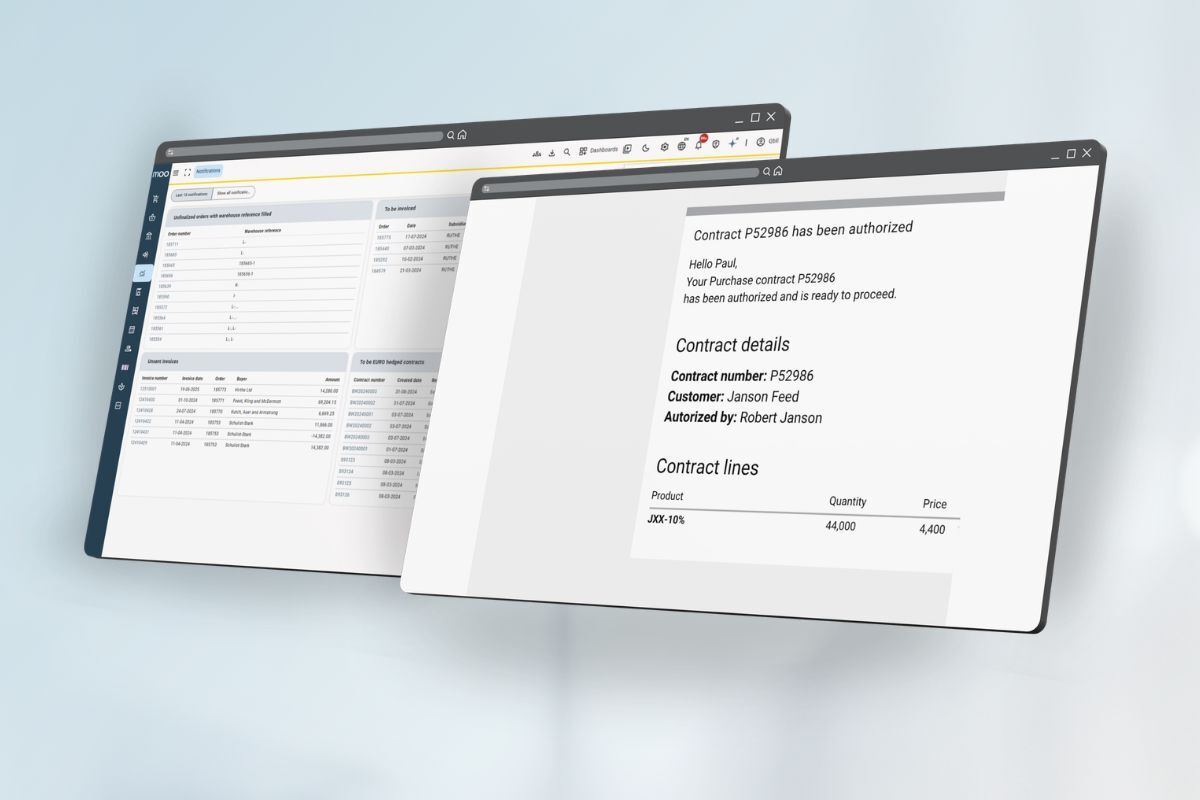

Dairy trading software is a specialised ERP solution designed specifically for companies trading in dairy ingredients such as milk powder, lactose, butterfat, and dairy proteins. Unlike generic business software, it handles the unique complexities of commodity trading, including contract management, multi-batch deliveries, position tracking, and the intricate supplier-customer relationships common in dairy ingredient markets.
What is dairy trading software and how does it work?
Dairy trading software is a specialised ERP system built specifically for traders dealing in dairy commodities and ingredients. It manages contracts, inventory, orders, and financial positions in one integrated platform designed around how dairy trading actually operates.
The software works by tracking your trading position in real time, showing exactly how much you’ve bought versus sold across different products and delivery periods. When you purchase 100,000 kilos of milk powder for delivery over six months, the system manages each batch delivery, quality specifications, and pricing formulas automatically.
Core functionality includes contract management, which handles complex commodity agreements; inventory tracking, which follows products from purchase through delivery; and order processing, which manages the multiple shipments typical in bulk trading. The system integrates with existing accounting software to automate transaction processing and maintain accurate financial records.
Most dairy trading software operates in the cloud, allowing traders to access critical information from anywhere while maintaining the security needed for sensitive commercial data. The software typically connects multiple users across trading, operations, and finance teams, ensuring everyone works with the same up-to-date information.
Who actually uses dairy trading software in their business?
Dairy trading software is primarily used by ingredient traders, commodity brokers, and companies dealing in bulk dairy products such as milk powder, whey, lactose, and dairy proteins. These businesses typically employ between 10 and 50 people and handle significant trading volumes that require professional management systems.
The typical user is a trading company that operates as an intermediary between dairy producers and food manufacturers. They might purchase milk powder from a European producer and sell it to food companies across different markets, managing multiple contracts with varying delivery schedules and specifications.
Companies that benefit most from dairy trading software include ingredient distributors handling multiple product lines, specialised dairy commodity brokers, and businesses involved in repackaging or blending operations. These organisations often outgrow Excel-based systems when their trading volume increases beyond what can be managed manually.
International trading companies particularly benefit from the software’s ability to handle different currencies, quality standards, and regulatory requirements across multiple markets. The software suits businesses where customers often become suppliers, creating complex trading relationships that require sophisticated tracking and management.
What’s the difference between dairy trading software and regular ERP systems?
Dairy trading software includes specialised features for commodity trading, such as position management, contract-to-delivery tracking, and real-time margin calculations. Regular ERP systems focus on general business management functions such as accounting, HR, and basic inventory, without the specific tools needed for trading operations.
The key difference lies in position management: dairy trading software continuously tracks your buying versus selling position for each product, showing exactly where you stand financially at any moment. Standard ERP systems treat each transaction separately, without this crucial trading overview.
Contract management in dairy trading software handles the complexity of commodity agreements, including pricing formulas, quality specifications, and delivery schedules that span months. Regular ERP systems typically manage simpler purchase orders and invoices, without the sophisticated contract tracking needed for bulk commodity trades.
Dairy trading software also manages the unique relationships where today’s customer becomes tomorrow’s supplier, tracking credit limits and trading positions across these complex business networks. Standard ERP systems separate customers and suppliers, missing the interconnected nature of commodity trading relationships.
How does dairy trading software help manage complex ingredient transactions?
Dairy trading software manages complex transactions by tracking multi-batch deliveries against single contracts, handling quality specifications for each shipment, and calculating pricing based on market formulas. It maintains visibility across the entire transaction lifecycle, from the initial contract through final delivery and payment.
When you sell 500,000 kilos of milk powder for delivery over twelve months, the software tracks each monthly shipment separately while maintaining the overall contract view. It manages quality certificates, delivery documentation, and ensures each batch meets the agreed specifications before processing payments.
The software handles pricing formulas that adjust based on market indices, currency fluctuations, and quality premiums common in dairy trading. Rather than fixed prices, many dairy contracts use complex formulas that the software calculates automatically for each delivery.
Perhaps most importantly, the software manages the intricate web of relationships where companies are simultaneously customers and suppliers. It tracks credit exposure, maintains trading limits, and provides the real-time visibility needed to manage risk across these interconnected business relationships safely and profitably.
What should you look for when choosing dairy trading software?
Look for industry-specific functionality, including position management, contract tracking, and multi-batch delivery handling. The software should integrate with your existing accounting systems and support international trading requirements such as multiple currencies and regulatory compliance across different markets.
Essential features include real-time position reporting that shows your buying versus selling exposure instantly; contract management that handles commodity-specific terms and pricing formulas; and inventory tracking that follows products through complex delivery schedules. The system should automate routine tasks while providing the detailed oversight needed for risk management.
Scalability is crucial because trading businesses often grow rapidly. Choose software that can handle increased transaction volumes and additional users without requiring a complete system replacement. Look for flexible pricing structures that allow you to pay for what you use rather than fixed enterprise licensing.
Consider implementation support and training, as specialised trading software requires proper setup and user education. The best solutions offer comprehensive implementation services that get your system operational quickly, typically within days rather than months.
Integration capabilities matter significantly: your trading software should connect seamlessly with existing accounting, logistics, and communication systems. This connectivity eliminates duplicate data entry and ensures all business systems work together effectively.
Understanding dairy trading software helps you evaluate whether your current systems meet your business needs. As trading volumes grow and relationships become more complex, specialised software becomes essential for maintaining profitability and managing risk effectively. If you’re considering dairy trading software for your business, speaking with specialists who understand ingredient trading can help you make the right choice for your specific requirements.
Frequently Asked Questions
How long does it typically take to implement dairy trading software?
Most dairy trading software implementations take between 2-6 weeks, depending on data migration requirements and system complexity. Cloud-based solutions typically deploy faster than on-premise systems, with some providers offering implementation within days for standard configurations. The key is having clean data ready for migration and dedicating time for proper user training.
Can dairy trading software handle multiple currencies and international regulations?
Yes, quality dairy trading software supports multi-currency transactions and can manage different regulatory requirements across markets. This includes handling varying quality standards, documentation requirements, and compliance rules for different countries. The software should automatically convert currencies and maintain audit trails for regulatory reporting.
What happens to our existing data when switching to dairy trading software?
Professional dairy trading software providers offer data migration services to transfer your existing contracts, customer information, and transaction history. Most systems can import data from Excel spreadsheets, accounting software, and other business systems. The migration process typically includes data cleaning and validation to ensure accuracy in the new system.
How does the software handle quality specifications and certificates for dairy ingredients?
Dairy trading software manages quality specifications by storing detailed product requirements for each contract and matching them against delivery certificates. The system can flag shipments that don’t meet specifications, track quality premiums or discounts, and maintain digital copies of all quality documentation for audit purposes and customer requirements.
What are the typical costs associated with dairy trading software?
Dairy trading software costs vary based on user count, transaction volume, and feature requirements. Most providers offer subscription-based pricing ranging from $100-500 per user per month, with some offering transaction-based pricing for smaller traders. Implementation costs, training, and ongoing support should be factored into the total investment.
Can the software integrate with our existing accounting system?
Most modern dairy trading software offers integration capabilities with popular accounting systems like QuickBooks, Sage, and enterprise ERP solutions. These integrations automatically sync transactions, eliminate duplicate data entry, and ensure financial records remain accurate. Check integration compatibility before selecting a solution to avoid costly custom development.
How does dairy trading software help with risk management?
The software provides real-time position tracking, showing your exposure across all products and delivery periods instantly. It can set automated alerts for position limits, credit exposure, and margin thresholds. This visibility allows traders to make informed decisions quickly and avoid overexposure in volatile markets, while maintaining detailed audit trails for compliance.