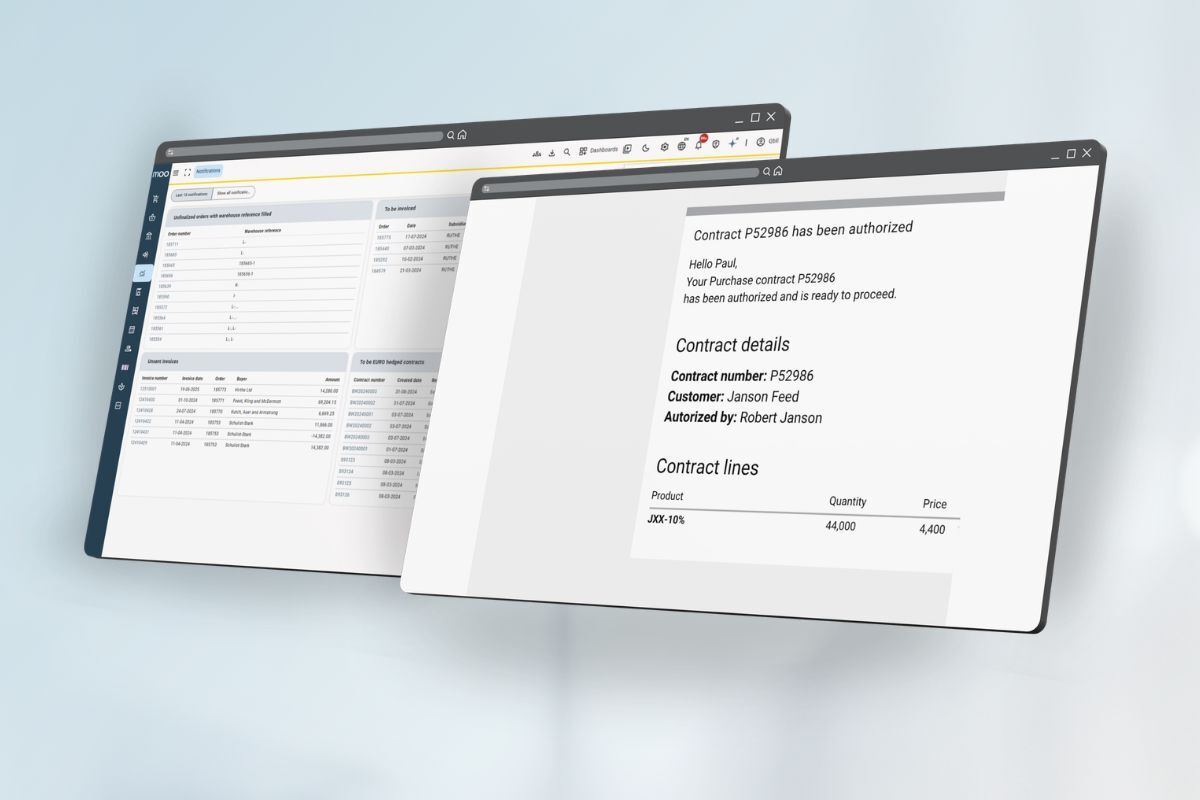

Reducing manual work in your trading back office starts with identifying repetitive tasks such as data entry, contract processing, and reconciliation. Modern trading software automates these processes through integrated workflows, real-time reporting, and seamless connections between systems. This transformation eliminates bottlenecks, reduces errors, and provides instant visibility into your trading positions for better decision-making.
What exactly is manual work in a trading back office?
Manual work in a trading back office involves repetitive, time-consuming tasks that require human intervention for data processing and administrative functions. These include entering contract data into multiple systems, matching invoices between purchase orders and supplier bills, reconciling trading positions across different platforms, and manually generating reports for management review.
The most common manual tasks consume significant resources every day. Contract processing involves entering details from paper or PDF agreements into trading systems, often requiring multiple entries across different platforms. Invoice matching requires staff to compare supplier invoices against purchase orders and delivery receipts, checking quantities, prices, and terms for accuracy.
Position reconciliation represents another major manual effort. Traders must calculate their exposure by comparing purchases against sales across various contracts, currencies, and delivery periods. This process typically involves spreadsheets, manual calculations, and cross-referencing multiple data sources to understand current market positions.
Administrative tasks such as generating reports, updating customer records, processing payments, and maintaining inventory records also require manual intervention. These activities, while essential for business operations, divert valuable time from core trading activities and strategic decision-making.
Why does manual work slow down trading operations so much?
Manual processes create significant bottlenecks because they require sequential completion and human availability. Each manual step introduces delays as staff must finish one task before starting another, preventing the real-time flow of information essential for effective trading decisions.
Error rates increase substantially with manual processing. Human mistakes in data entry, calculation errors, and mismatched information require additional time to identify and correct. These errors often cascade through systems, creating more work downstream and potentially affecting customer relationships and profitability calculations.
Decision-making suffers when traders lack real-time visibility into their positions. Manual reconciliation processes mean position updates happen periodically rather than continuously. This delay prevents traders from responding quickly to market opportunities or managing risk effectively during volatile periods.
Resource allocation becomes inefficient when skilled traders spend time on administrative tasks rather than market analysis and relationship building. The opportunity cost is significant, as experienced trading professionals could generate more value through strategic activities than through data entry and reconciliation.
What are the biggest manual work challenges in commodity trading?
Contract management complexity represents the most significant challenge in commodity and ingredient trading. Multiple contract variations with different pricing formulas, delivery terms, and quality specifications require careful manual tracking to ensure compliance and accurate invoicing.
Multi-currency transactions create a substantial manual workload. Traders must convert prices, track exchange-rate fluctuations, and calculate hedging requirements across different currencies. This process becomes particularly complex when dealing with forward contracts and price adjustments based on currency movements.
Inventory tracking across multiple locations requires constant manual updates. Physical stock movements, quality changes, and location transfers must be recorded and reconciled. This challenge intensifies for traders dealing with blended products or repackaging operations, where inventory composition changes frequently.
Regulatory compliance demands extensive manual documentation. Quality certificates, origin declarations, and shipping documents require manual filing and cross-referencing. Compliance reporting often involves extracting data from various systems and formatting it according to regulatory requirements.
Price formula calculations add another layer of complexity. Many dairy trading contracts include complex pricing mechanisms based on market indices, quality premiums, and delivery adjustments. Manually calculating these formulas increases the risk of errors and delays invoice processing.
How can trading software reduce back office manual work?
Modern trading systems eliminate manual work through automated data processing that captures information once and distributes it across all relevant functions. Integrated workflows connect trading, logistics, and accounting automatically, removing the need for duplicate data entry and manual information transfer between departments.
Automated contract processing transforms how traders handle agreements. The system captures contract details electronically, automatically calculates pricing formulas, and generates delivery schedules without manual intervention. This automation extends to invoice generation, where the system creates accurate invoices based on contract terms and actual deliveries.
Real-time position management provides instant visibility into trading exposure. The system automatically updates positions as new contracts are entered or existing contracts are modified. This capability enables traders to see their current exposure immediately without manual calculation or reconciliation.
Seamless integration with accounting systems eliminates manual transaction processing. The trading system automatically creates accounting entries, updates customer balances, and processes payments based on predefined rules. This integration ensures consistency between trading records and financial accounts without manual reconciliation.
Dairy trading software specifically addresses industry challenges through purpose-built automation. These systems support commodity trading workflows and automate industry-specific processes such as quality adjustments, storage calculations, and regulatory reporting requirements.
What should you look for in back office automation solutions?
Integration capabilities represent the most critical factor when evaluating automation solutions. The system must connect seamlessly with your existing accounting software, logistics platforms, and communication tools to eliminate manual data transfer and ensure information consistency across all business functions.
Industry-specific functionality ensures the solution supports your trading requirements. Generic systems often require extensive customisation, while purpose-built trading software includes features such as contract management, position tracking, and commodity-specific pricing calculations as standard.
Scalability becomes essential as your trading business grows. The solution should handle increasing transaction volumes, additional users, and expanded product ranges without requiring system replacement. Look for flexible pricing structures that allow you to pay for what you use and scale gradually.
User-friendliness determines adoption success within your team. The system should feel intuitive to traders who are accustomed to working with spreadsheets and phone-based transactions. Complex systems that require extensive training often fail to deliver the expected productivity improvements.
Implementation considerations include data migration support, user training, and go-live assistance. Professional implementation services ensure a smooth transition from manual processes to automated workflows, typically requiring around two working days for full system setup and configuration.
Support and maintenance capabilities matter for ongoing success. Choose providers who understand trading operations and can provide responsive support during critical trading periods. The solution should include regular updates that address changing regulatory requirements and industry best practices.
Reducing manual work in your trading back office transforms operational efficiency and decision-making capabilities. The right automation solution eliminates repetitive tasks while providing real-time visibility into your trading positions. Contact us to discuss how automated trading systems can streamline your back office operations and support your business growth.
Frequently Asked Questions
How long does it typically take to implement trading automation software?
Most modern trading automation solutions can be implemented within 2-4 weeks, including data migration and staff training. The timeline depends on your current system complexity and the number of integrations required. Professional implementation services typically require around two working days for system setup, with additional time for user training and workflow optimization.
What happens to our existing data when we switch from manual processes to automated systems?
Professional trading software providers offer data migration services to transfer your historical contracts, customer information, and trading records into the new system. This process preserves your business continuity while ensuring all critical information remains accessible. Most implementations include data validation to ensure accuracy during the transition.
How do we handle staff resistance when moving from familiar manual processes to automation?
Success depends on demonstrating immediate value to your team. Start by automating the most time-consuming manual tasks first, showing staff how automation frees them for higher-value activities like market analysis and customer relationship building. Provide comprehensive training and highlight how the system makes their jobs easier rather than replacing their expertise.
Can automated systems handle complex pricing formulas and contract variations specific to our industry?
Yes, modern trading software is designed to accommodate complex pricing mechanisms including market indices, quality premiums, currency adjustments, and delivery modifications. Industry-specific solutions come pre-configured with common formula types and allow customization for unique contract terms. The system automatically applies these formulas to eliminate manual calculation errors.
What's the typical return on investment for back office automation in trading operations?
Most trading companies see ROI within 6-12 months through reduced labor costs, fewer errors, and improved decision-making speed. Key benefits include eliminating overtime for manual reconciliation, reducing error correction costs, and enabling traders to focus on revenue-generating activities. The exact ROI depends on your current manual workload and transaction volume.
How do we ensure data security when integrating multiple systems through automation?
Look for solutions that offer enterprise-grade security features including encrypted data transmission, role-based access controls, and audit trails for all transactions. The system should comply with industry security standards and provide backup and disaster recovery capabilities. Integration should use secure APIs rather than manual file transfers to maintain data integrity.
What should we do if our current accounting system doesn't integrate well with trading automation software?
Most professional trading software offers multiple integration options including direct API connections, automated file imports/exports, and middleware solutions. If direct integration isn't possible, the system can generate standardized reports and transaction files that your accounting team can import. Many providers also offer consultation on accounting system upgrades that improve overall efficiency.