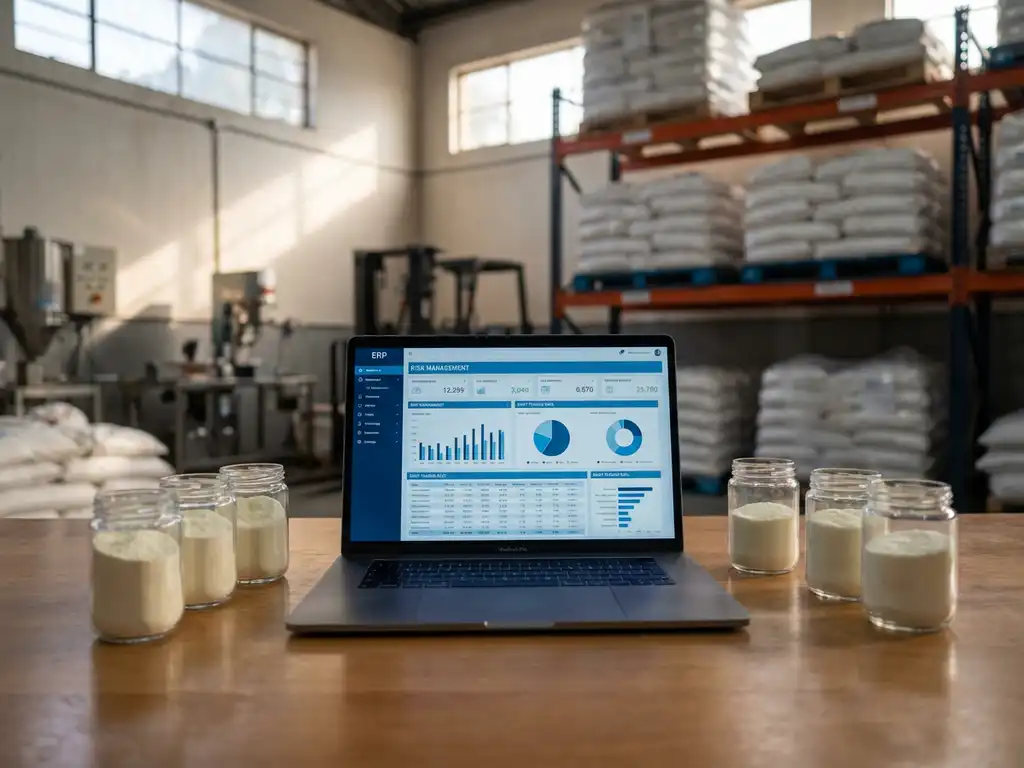
ERP software reduces operational risk in dairy ingredient trading by providing real-time visibility into positions, automating contract management, and integrating risk monitoring across all trading activities. Modern Logiciel ERP pour l'industrie laitière operations helps traders identify potential problems before they escalate, maintain accurate inventory tracking, and ensure regulatory compliance through automated workflows and centralised data management.
Quels types de risques opérationnels rencontrent quotidiennement les négociants en ingrédients laitiers ?
Les négociants en produits laitiers sont confrontés à de multiples risques opérationnels, notamment la volatilité des marchés, les perturbations de la chaîne d'approvisionnement, les défaillances de gestion des contrats, les erreurs de calcul des stocks et les défis de conformité réglementaire. Ces risques peuvent avoir un impact significatif sur la rentabilité et la continuité des activités s'ils ne sont pas gérés correctement.
Market volatility represents one of the most significant challenges, with dairy commodity prices fluctuating based on seasonal production, weather conditions, and global demand patterns. Traders dealing in milk powder, lactose, and whey proteins must constantly monitor price movements while managing their contract positions to avoid substantial losses.
Supply chain disruptions pose another critical risk, particularly when dealing with temperature-sensitive dairy ingredients. Transportation delays, storage facility issues, or production problems at supplier facilities can leave traders unable to fulfil contractual obligations, resulting in penalties or damage to customer relationships.
Contract management failures occur when traders lose track of delivery schedules, quality specifications, or payment terms across multiple agreements. With dairy ingredient trading often involving complex contracts for bulk quantities delivered in smaller batches over time, manual tracking becomes increasingly error-prone as business volumes grow.
Inventory miscalculations can lead to overcommitment or stock shortages. Traders need precise visibility into current stock levels, committed quantities, and available inventory to avoid selling products they cannot deliver or missing profitable trading opportunities.
How does ERP software identify and prevent trading risks before they become problems?
ERP software identifies and prevents trading risks through real-time monitoring capabilities, automated alert systems, predictive analytics, and integrated risk assessment tools. These systems continuously analyse trading data to spot potential issues early and enable preventive action before problems escalate.
Real-time monitoring provides instant visibility into all trading positions, allowing traders to see their exposure across different commodities, customers, and time periods. This continuous oversight helps identify when positions approach risk thresholds or when market movements threaten profitability.
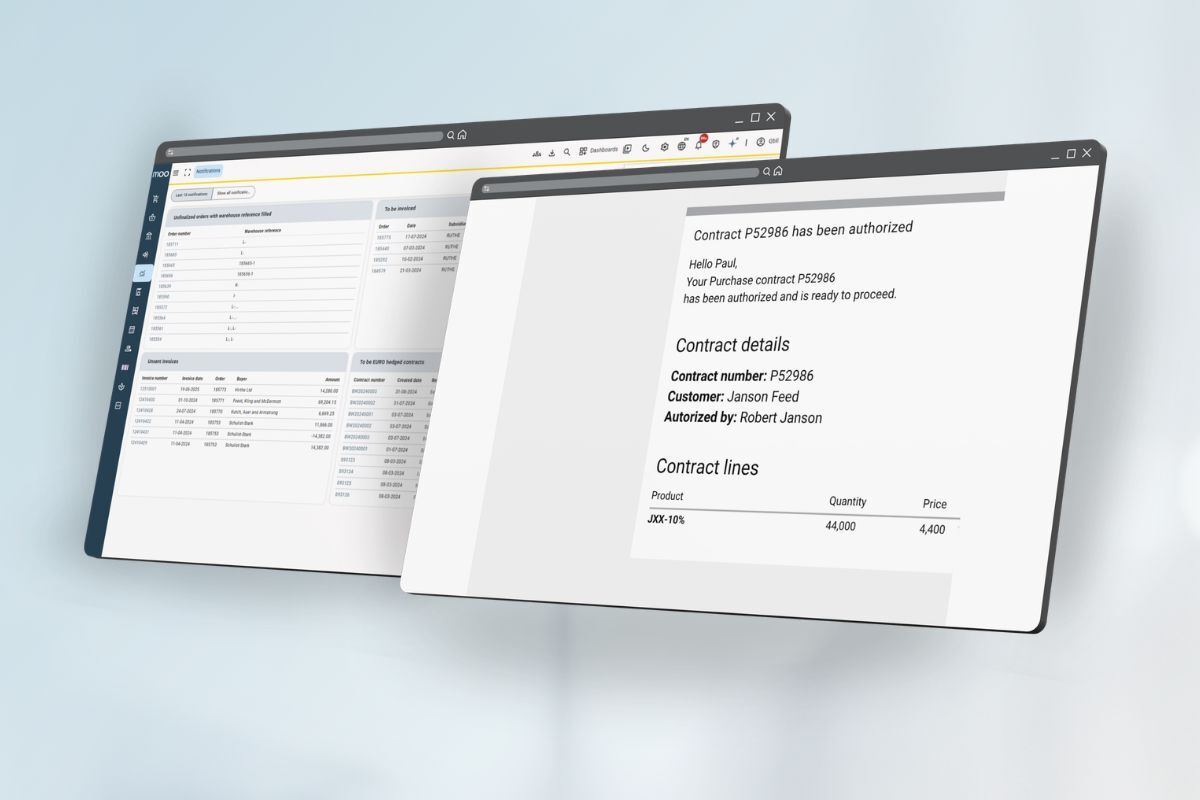
Automated alert systems notify traders when specific conditions are met, such as contract delivery dates approaching, inventory levels falling below safety stock levels, or margin requirements exceeding predetermined limits. These proactive notifications ensure nothing falls through the cracks during busy trading periods.
Predictive analytics use historical data and current market conditions to forecast potential risks. The system can identify patterns that typically precede problems, such as seasonal supply constraints or customer payment delays, enabling traders to take preventive measures.
Integrated risk assessment tools evaluate the cumulative impact of all trading activities, providing a comprehensive view of overall business risk. This holistic approach helps traders understand how individual trades affect their total risk profile and make informed decisions about future commitments.
What’s the difference between manual risk management and ERP-automated risk control?
Manual risk management relies on spreadsheets and individual tracking methods, while ERP-automated risk control integrates all risk monitoring into a single system with real-time updates and automated calculations. The automated approach significantly improves accuracy, saves time, and reduces human error in risk identification and response.
Traditional spreadsheet-based risk tracking requires traders to manually update multiple files, calculate positions, and monitor various risk factors across different documents. This approach becomes increasingly unreliable as trading volumes grow, with a high potential for errors, outdated information, and missed critical updates.
ERP-automated systems eliminate manual data entry by integrating all trading activities into one platform. Contract details, inventory movements, and financial transactions automatically update risk calculations, ensuring traders always have current and accurate information for decision-making.
Accuracy improvements are substantial with automated systems. Human errors in calculations, data entry mistakes, and oversights of critical dates are virtually eliminated. The system maintains consistent calculations and applies risk rules uniformly across all trades.
Time savings are significant, as traders no longer spend hours updating spreadsheets or reconciling different data sources. Instead, they can focus on analysing risk information and making strategic trading decisions. The system provides instant access to comprehensive risk reports that would take hours to compile manually.
Response time to emerging risks improves dramatically with automated monitoring. While manual systems might identify problems only during periodic reviews, automated systems can alert traders immediately when risk thresholds are breached or concerning patterns emerge.
How do traders use ERP position management to control financial exposure?
Traders use ERP position management to control financial exposure through real-time position tracking, contract-to-delivery matching, and automated margin calculations. These tools help maintain optimal risk levels while maximising trading opportunities by providing precise visibility into current commitments and available capacity.
Real-time position tracking shows exactly how much traders have bought versus sold across different dairy ingredients and delivery periods. This immediate visibility prevents overcommitment and helps identify arbitrage opportunities between different contract positions.
Contract-to-delivery matching ensures traders can fulfil their obligations by tracking which purchases cover which sales commitments. The system automatically matches incoming inventory against outgoing delivery requirements, highlighting any gaps that need attention before they become problems.
Automated margin calculations continuously update profit projections based on current market prices and contract terms. Traders can see how market movements affect their profitability across all positions, enabling proactive adjustments to protect margins or capitalise on favourable price movements.
This integrated approach allows traders to evaluate new opportunities against their existing positions, ensuring they maintain appropriate risk levels while pursuing profitable trades. Logiciel de trading spécialisé designed for dairy ingredient markets provides the specific functionality needed to manage these complex trading scenarios effectively.
Position management also supports strategic decision-making by showing the cumulative effect of all trading activities. Traders can assess whether additional purchases or sales would improve their overall position or create unwanted risk concentrations. This comprehensive view enables more sophisticated trading strategies while maintaining prudent risk control.
ERP software transforms operational risk management in dairy ingredient trading by replacing manual processes with automated monitoring and control systems. The integration of position tracking, contract management, and risk assessment provides traders with the tools needed to operate confidently in volatile markets while protecting their business from operational failures. For traders ready to move beyond spreadsheet-based management, conseils professionnels can help them evaluate the most suitable approach for their specific trading operations.
Foire aux questions
How long does it typically take to implement ERP software for dairy ingredient trading operations?
Implementation timelines vary based on business complexity, but most dairy trading operations can expect 3-6 months for full deployment. This includes data migration, system configuration, staff training, and testing phases. Smaller operations with simpler requirements may complete implementation in 6-8 weeks, while larger companies with multiple locations and complex trading relationships may require 9-12 months.
What happens if the ERP system goes down during active trading hours?
Modern ERP systems include built-in redundancy and backup systems to minimise downtime risks. Most cloud-based solutions offer 99.9% uptime guarantees with automatic failover capabilities. Additionally, systems typically cache critical data locally and provide offline access to essential functions, allowing traders to continue operations during brief outages while maintaining data integrity.
Can ERP software integrate with existing commodity trading platforms and market data feeds?
Yes, most modern ERP systems designed for commodity trading offer robust integration capabilities with major trading platforms, market data providers, and financial systems. Common integrations include CME Group data feeds, Bloomberg terminals, and popular trading platforms. API connections enable real-time data synchronisation, ensuring consistent pricing and position information across all systems.
How does ERP software handle the unique quality specifications and certifications required for different dairy ingredients?
ERP systems maintain detailed product specifications databases that track quality parameters, certifications, and compliance requirements for each dairy ingredient type. The software automatically matches available inventory against specific customer requirements and alerts traders when products don't meet contract specifications. This includes managing organic certifications, protein content levels, and other critical quality metrics.
What are the most common implementation mistakes that dairy traders should avoid when adopting ERP software?
The biggest mistakes include insufficient staff training, attempting to replicate old manual processes instead of leveraging automation, and inadequate data cleansing before migration. Successful implementations require dedicated change management, comprehensive user training programs, and willingness to adapt existing workflows to take advantage of the system's capabilities rather than forcing the software to match outdated processes.
How does ERP software help manage the seasonal nature of dairy ingredient supply and demand?
ERP systems use historical data and seasonal patterns to provide predictive insights for supply planning and risk management. The software can automatically adjust safety stock levels, alert traders to seasonal price patterns, and help plan contract strategies around known supply fluctuations. Advanced systems also integrate weather data and production forecasts to anticipate supply disruptions before they occur.
What level of customisation is typically required for dairy ingredient trading operations?
While many ERP systems offer industry-specific modules for commodity trading, some customisation is usually necessary to accommodate unique business processes, reporting requirements, and integration needs. Most implementations require 20-30% customisation, focusing on contract templates, risk calculation formulas, and specific reporting formats. Choose systems with flexible configuration options to minimise custom development costs.