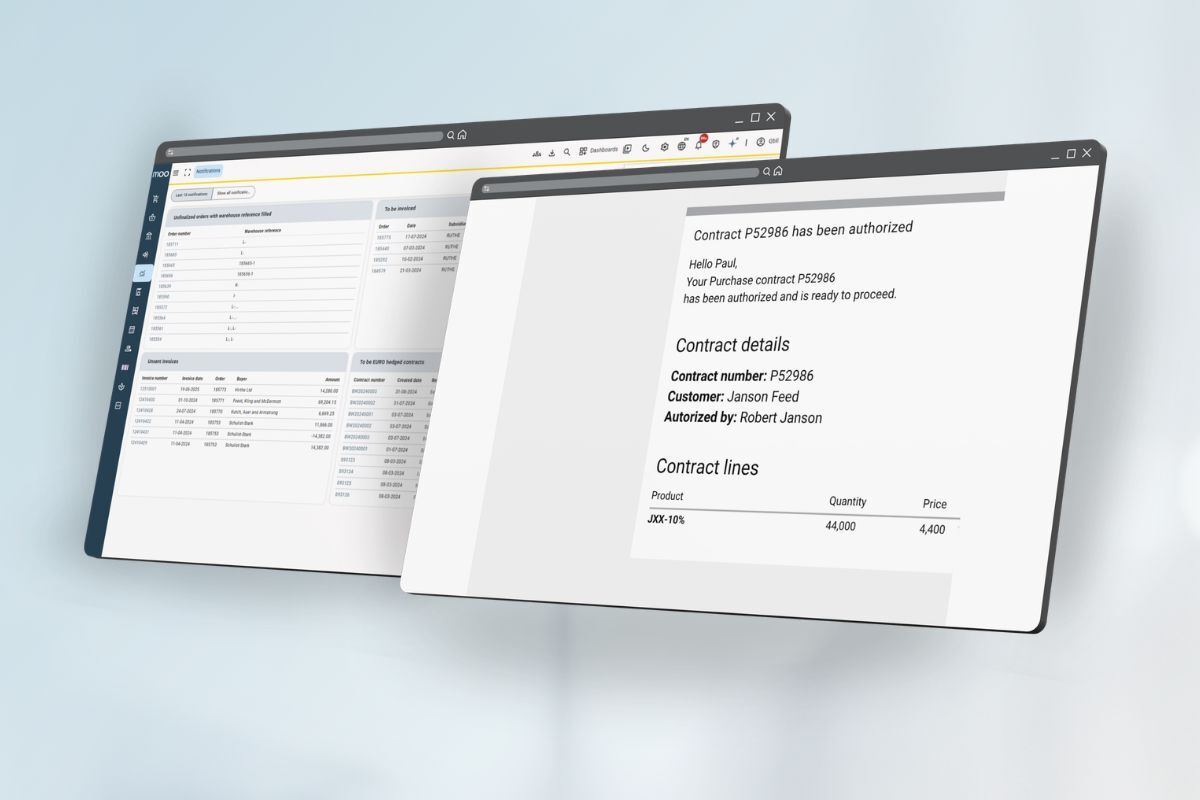

Streamlining dairy ingredient trading processes requires implementing specialised trading software that centralises contract management, order processing, and inventory tracking in a single, connected system. Modern ERP software for the dairy industry eliminates manual Excel workflows while providing real-time position visibility, which is essential for managing thin margins in commodity trading. Professional systems integrate with existing accounting platforms and scale flexibly as trading volumes grow.
What are the biggest challenges in dairy ingredient trading processes?
Dairy ingredient traders face significant operational challenges, including manual Excel-based processes, a lack of real-time position visibility, complex contract management across multiple suppliers, and coordination difficulties among various supply chain parties. These issues compound as trading volumes increase, creating risks of lost orders, margin erosion, and compliance problems.
Manual processes create the most immediate problems for growing dairy ingredient businesses. Traders typically start with Excel spreadsheets to track contracts for products such as milk powder, lactose, and whey protein. However, as volumes increase beyond a few dozen contracts per month, maintaining accurate records becomes increasingly difficult. Positionsmanagement suffers when traders cannot quickly see how much they have purchased versus sold across different commodities.
Contract complexity adds another layer of difficulty. Dairy ingredient contracts often involve bulk quantities delivered in smaller batches over time. For example, a 100,000-kilogram milk powder contract might be delivered in twenty 5,000-kilogram shipments over several months. Tracking these partial deliveries, matching invoices, and maintaining accurate inventory levels requires constant manual attention, which increases the risk of errors.
Supply chain coordination presents ongoing challenges when multiple parties handle different aspects of each transaction. Producers, traders, logistics providers, and end customers must stay aligned on delivery schedules, quality specifications, and payment terms. Without centralised communication systems, important information gets lost in email chains and phone conversations.
How does specialised trading software transform dairy ingredient operations?
Specialised trading platforms transform dairy operations by centralising all trading activities into one integrated system that automates routine tasks, provides real-time position tracking, and eliminates Excel limitations. These systems connect contract management, inventory tracking, order processing, and financial reporting to give traders complete operational visibility.
Centralised operations eliminate the fragmented workflows that plague Excel-based trading. Instead of maintaining separate spreadsheets for contracts, inventory, and customer orders, traders work within one platform that automatically updates all related information. When a partial delivery arrives, the system updates contract status, adjusts inventory levels, and triggers any necessary customer notifications simultaneously.
Real-time position tracking becomes possible when all trading data flows through connected systems. Traders can instantly see their exposure across different commodities, identify profitable opportunities, and avoid overcommitting inventory. This visibility is crucial in commodity trading, where margins are often measured in pennies per kilogram.
Automation handles repetitive tasks that consume valuable trading time. Order processing workflows can automatically generate purchase orders, delivery schedules, and invoices based on contract terms. Integration with existing accounting systems ensures financial records stay current without manual data entry.
Eliminating Excel limitations allows businesses to scale beyond the constraints of spreadsheet-based workflows. Professional trading systems handle thousands of contracts, complex pricing formulas, and multi-currency transactions that would be impossible to manage manually.
What essential features should dairy traders look for in management software?
Essential features for dairy trading software include comprehensive contract management, automated order processing, real-time inventory tracking, position management with profit visibility, seamless financial system integration, and flexible reporting capabilities that scale with business growth. These core functionalities must work together seamlessly to support complex commodity trading workflows.
Vertragsmanagement capabilities should handle the complexity of dairy ingredient agreements. This includes managing bulk contracts with multiple delivery dates, tracking quality specifications for different product grades, and maintaining pricing formulas that may include market adjustments. The system should automatically alert users to upcoming deliveries and contract milestones.
Order processing automation streamlines the workflow from the initial customer inquiry to final delivery. Look for systems that can generate quotes quickly, convert approved quotes into contracts, create purchase orders for suppliers, and track order status throughout the fulfilment process. Integration with logistics providers helps coordinate deliveries efficiently.
Position management provides the real-time visibility essential for profitable trading. Traders need instant access to their current position across all commodities, including committed purchases, confirmed sales, and available inventory. Profit tracking should show margins at both the individual contract and portfolio levels.
Financial integration ensures trading data flows seamlessly into accounting systems. This eliminates duplicate data entry while maintaining accurate financial records. Look for systems that can handle multi-currency transactions, complex pricing calculations, and various payment terms common in international commodity trading.
Reporting capabilities should provide both operational and strategic insights. Daily position reports help traders make informed decisions, while monthly performance analysis supports business planning. Customisable reports allow businesses to focus on the metrics most relevant to their specific trading strategies.
How do you transition from Excel to professional trading systems without disrupting operations?
Transitioning from Excel to professional trading systems requires careful planning, including data preparation, parallel system operation, gradual migration phases, and comprehensive team training. Successful implementations typically take one to two weeks with proper preparation, allowing businesses to maintain continuity while gaining new capabilities.
Planning the migration starts with cataloguing existing data and identifying which information needs to be transferred to the new system. This includes active contracts, supplier details, customer information, and historical trading data. Clean, organised Excel files make the conversion process smoother and more accurate.
Data preparation involves standardising formats and removing inconsistencies from existing spreadsheets. Product codes, supplier names, and contract terms should follow consistent formats. This preparation work, while time-consuming, prevents problems during the actual system setup.
Parallel system operation allows teams to build confidence in the new software while maintaining familiar Excel backups. During this phase, traders enter new contracts in both systems and compare results to ensure accuracy. This approach reduces anxiety about losing critical information during the transition.
Team training should begin before the new system goes live. User training works best when it focuses on daily workflows rather than abstract software features. Practical exercises using real company data help team members understand how the new system improves their specific responsibilities.
Gradual transition phases help manage change effectively. Start by using the new system for new contracts while maintaining Excel for existing agreements. As team confidence grows, migrate historical data and retire Excel workflows systematically.
Professionell Implementierungsunterstützung can significantly reduce transition risks. Experienced providers help configure systems correctly, convert data accurately, and train teams effectively. We typically have trading environments operational within two working days, allowing businesses to start benefiting from professional systems quickly.
The transition from Excel to professional trading systems represents a significant step forward for growing dairy ingredient businesses. With proper planning and support, this change enhances operational efficiency while providing the scalability needed for continued growth. If you’re ready to explore how modern trading software can transform your operations, Kontaktieren Sie uns to discuss your specific requirements and implementation timeline.
Häufig gestellte Fragen
What's the typical cost of implementing specialised dairy trading software?
Implementation costs vary based on business size and complexity, but most dairy trading software solutions offer flexible pricing models that scale with trading volumes. Initial setup typically includes software licensing, data migration, and training, with ongoing costs often structured as monthly subscriptions. Many providers offer ROI assessments to demonstrate how efficiency gains and error reduction quickly offset the investment.
How long does it take to see measurable improvements after implementing trading software?
Most businesses see immediate improvements in data accuracy and workflow efficiency within the first week of implementation. Significant time savings from automated processes typically become apparent within 2-4 weeks, while strategic benefits like better position management and margin optimization develop over 1-3 months as teams become fully proficient with the system.
Can trading software integrate with our existing accounting system and logistics providers?
Modern dairy trading platforms are designed to integrate with popular accounting systems like QuickBooks, SAP, and Xero, as well as major logistics providers and freight forwarders. Most integration can be configured during implementation, allowing seamless data flow between systems without manual data entry or duplicate record-keeping.
What happens to our data if we need to switch software providers in the future?
Reputable trading software providers ensure data portability through standard export formats and comprehensive data backup systems. Your contract history, supplier information, and trading records should always remain accessible in formats that can be imported into other systems. Always verify data export capabilities and backup policies before selecting a provider.
How does trading software handle the complex pricing formulas common in dairy ingredient contracts?
Professional trading systems accommodate complex pricing structures including market-based adjustments, tiered pricing, currency fluctuations, and quality premiums or discounts. The software can automatically calculate final prices based on predetermined formulas and market data feeds, ensuring accurate invoicing and margin tracking without manual calculations.
What level of technical expertise does our team need to operate trading software effectively?
Most modern trading platforms are designed for business users rather than technical specialists. If your team can operate Excel proficiently, they should adapt quickly to professional trading software. Comprehensive training programs and ongoing support help ensure smooth adoption, and many systems offer intuitive interfaces that mirror familiar business workflows.
How do we maintain business continuity during peak trading periods while implementing new software?
The best approach is to schedule implementation during slower trading periods when possible, but parallel system operation allows continued business during busy times. Start with new contracts in the trading software while maintaining Excel for active agreements, then gradually migrate existing contracts as the team gains confidence and trading volumes permit.