Home » What is the difference between CTRM and ERP for physical commodity traders?
What is the difference between CTRM and ERP for physical commodity traders?
Martine
Knowledge, News
A CTRM (commodity trading and risk management) system manages trading: contracts, positions, prices and risk. An ERP (enterprise resource planning) system manages the operations behind it: orders, logistics, stock, invoicing and finance. A physical commodity trader needs both. Many companies use two separate systems. A platform that combines CTRM and ERP in one database removes the gap between them.
What each covers
CTRM
ERP
Contracts
Purchase and sales contracts, pricing
Orders based on contracts
Position
Long and short per product and period
Stock
Risk
Futures, hedging, mark-to-market
Credit limits
Logistics
Limited
Transport, documents, planning
Finance
Deal results
Invoicing, debtors and creditors, export to accounting
Why the split causes problems
Contracts are entered in the CTRM and orders again in the ERP.
The position in the CTRM does not see stock movements in the ERP straight away.
The result per deal needs costs from the ERP and prices from the CTRM.
Which one do you need?
Mainly paper or financial trading: a CTRM may be enough.
Physical trading with logistics, stock and invoicing: you need both, and they should share the same data.
Small and medium-sized traders: one platform that combines both is usually simpler than linking two systems.
Check how the two systems exchange data, and how often.
Ask where the position comes from. If it does not include stock and deliveries, it is incomplete.
CTRM, ERP and Moo Software
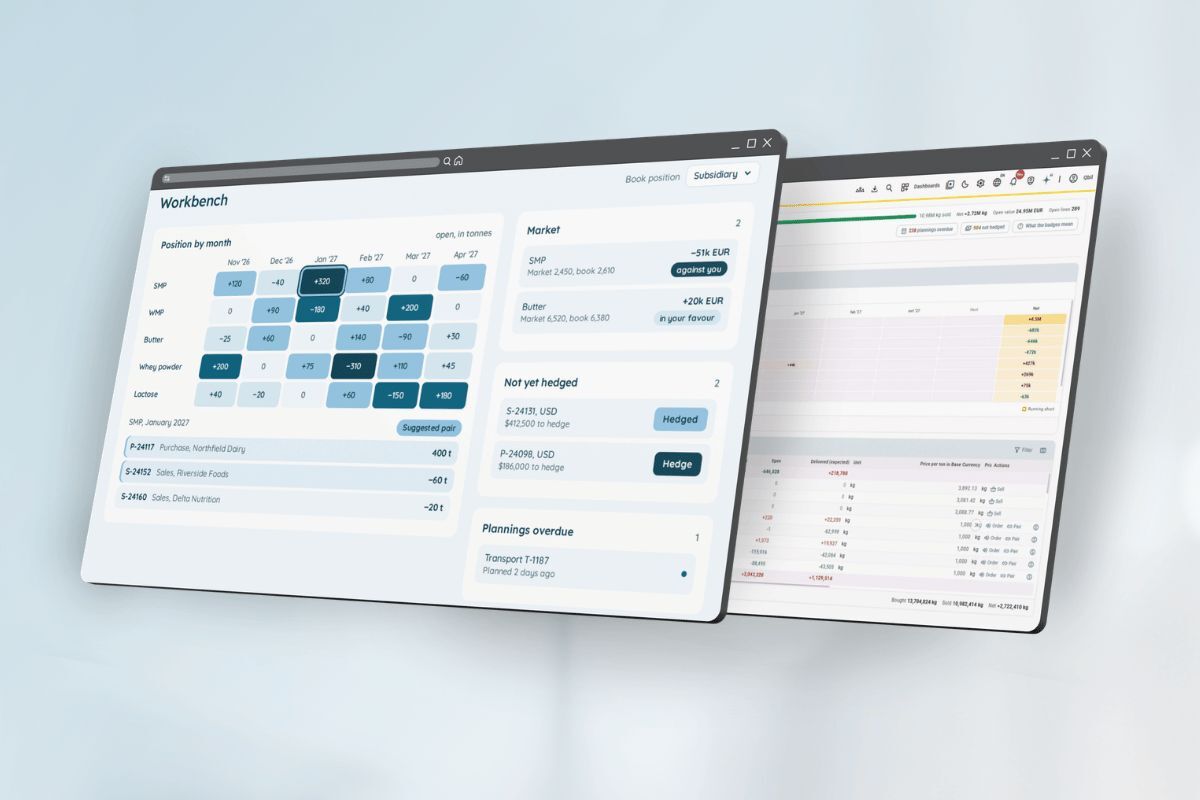
Moo combines CTRM and ERP in one database. Contracts, positions, futures and currency hedging sit next to orders, logistics, stock, invoicing and the result per deal, so nothing is entered twice and the position includes every contract, delivery and stock movement.
See it with your own data
Want to see CTRM and ERP working from the same data in Moo? Book a demo or contact us.
Want to know more?
If you’d like more details or have any questions about this news item, don’t hesitate to get in touch.