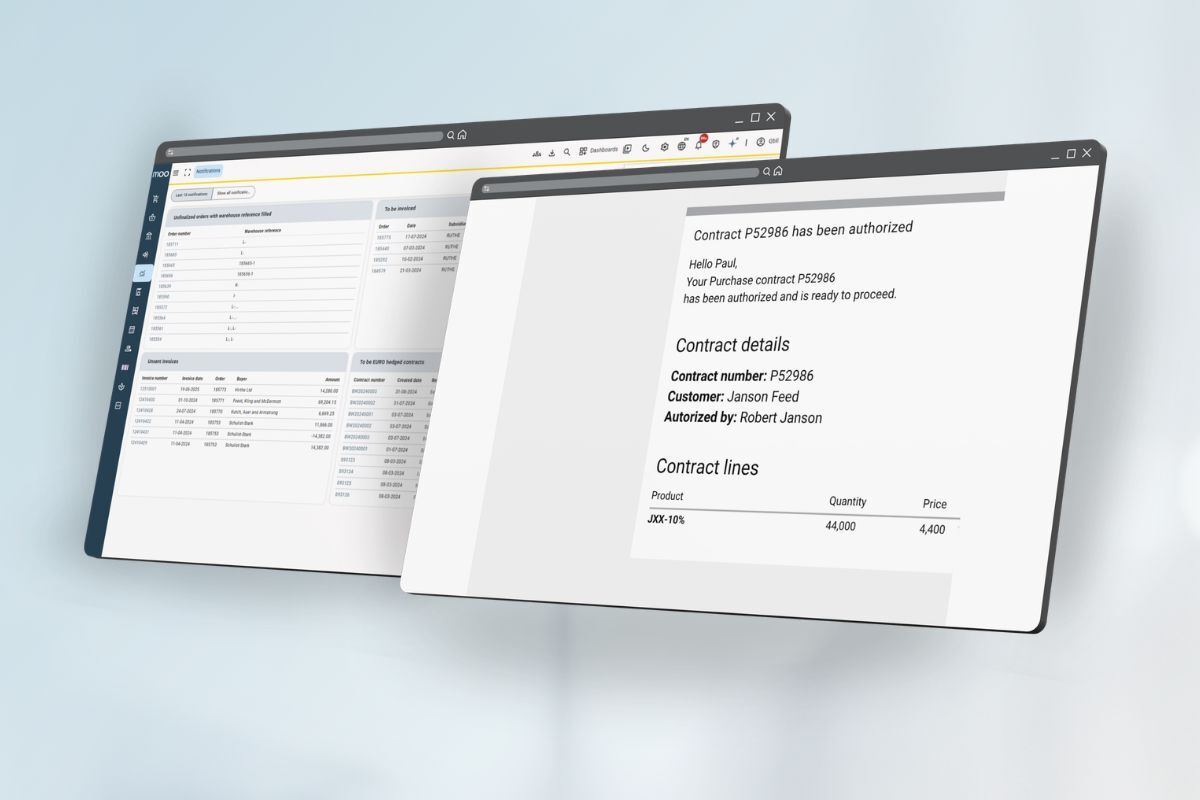

Commodity trading software is specialised technology designed to manage trades, contracts, positions, and operations for businesses dealing in raw materials such as dairy ingredients, grains, or metals. Unlike generic business software, it handles the complex requirements of trading operations—including contract management, position tracking, and real-time inventory oversight—within one integrated system.
What exactly is commodity trading software, and how does it work?
Commodity trading software is a specialised platform that manages the entire trading lifecycle, from initial contracts through to final delivery and invoicing. It differs fundamentally from generic business software by supporting the unique workflows of commodity trading, including complex pricing structures, quality specifications, and delivery schedules.
The software works by centralising all trading activities in one connected system. When you negotiate a contract for dairy ingredients such as milk powder or lactose, the system captures all terms, including quantities, prices, delivery dates, and quality specifications. It then tracks your position in real time, showing exactly how much you have bought versus sold, helping you manage risk and identify opportunities.
Dairy trading software specifically addresses the complexities of ingredient trading, where products often require blending, repackaging, or quality adjustments. The system manages these processes while maintaining full traceability and compliance with food safety requirements.
Integration capabilities connect your trading operations with accounting systems, logistics providers, and banking platforms, creating a seamless flow of information that reduces manual work and eliminates errors that commonly occur when using disconnected systems.
Why do ingredient and dairy traders struggle with generic business software?
Generic business software fails ingredient and dairy traders because it is built for standard business processes, not the complex realities of commodity trading. These systems cannot handle multi-layered contracts, position management, or the intricate relationships in which customers often become suppliers.
Excel spreadsheets, while familiar, become risky as trading volumes grow. They cannot provide real-time position updates, lack proper audit trails, and create significant risks when multiple people access and modify critical trading data. Version control becomes difficult, and errors can cost thousands through missed opportunities or incorrect positions.
Standard ERP systems struggle with commodity-specific requirements such as quality specifications, sampling protocols, and complex pricing formulas tied to market indices. They are designed for manufacturing or retail, not the fast-moving world of ingredient trading, where margins are tight and timing is everything.
The unique challenge for dairy traders is managing products that may be processed, blended, or repackaged before final delivery. Generic software cannot track these transformations while maintaining accurate cost calculations and traceability requirements essential for food safety compliance.
What are the key features that make trading software essential for growing businesses?
Essential trading software features include comprehensive contract management, real-time position tracking, integrated inventory management, and automated transaction processing. These capabilities work together to provide the control and visibility that growing trading businesses need to operate efficiently.
Contract management goes beyond simple record-keeping to handle complex terms, multiple delivery schedules, and quality specifications. The system should manage amendments, track performance against original terms, and alert you to upcoming obligations or opportunities.
Real-time position tracking is crucial for maintaining profitability. You need instant visibility of your exposure across all products, showing committed purchases, confirmed sales, and available inventory. This prevents overcommitment and identifies arbitrage opportunities as market conditions change.
Automated processing eliminates manual data entry by connecting trading activities with financial systems. When you execute a trade, the system automatically creates the necessary accounting entries, updates positions, and triggers any required workflows for logistics or quality control.
Integration capabilities ensure your trading software works seamlessly with existing accounting, banking, and logistics systems. This connectivity eliminates duplicate data entry and ensures consistency across all business operations.
How do you know when your trading business has outgrown Excel and basic tools?
Your business has outgrown basic tools when you are spending more time managing data than trading, when errors are increasing despite careful processes, or when you cannot quickly answer questions about your current position across all products and contracts.
Volume indicators include managing more than 50 active contracts simultaneously, processing over 100 transactions monthly, or handling multiple product lines with complex specifications. At these levels, Excel becomes unwieldy and error-prone, creating more problems than solutions.
Risk management concerns arise when you cannot instantly see your total exposure, when position calculations require manual updates, or when you have experienced losses due to overlooked commitments or missed opportunities. These situations indicate that your business complexity exceeds your current system capabilities.
Operational warning signs include staff spending excessive time on data entry and reconciliation, difficulty generating accurate reports for management or banking requirements, and challenges maintaining audit trails for compliance purposes. When these administrative tasks consume significant resources, it is time to consider specialised trading software.
Growth limitations become apparent when you are reluctant to take on new business because your systems cannot handle additional complexity, or when you are missing market opportunities because you lack real-time visibility of your trading position.
What should you look for when choosing commodity trading software?
When choosing commodity trading software, prioritise industry-specific functionality, scalability to match your growth plans, integration capabilities with existing systems, and implementation timelines that minimise business disruption. The software should support your specific trading workflows rather than requiring you to adapt to generic processes.
Industry-specific features are essential for dairy and ingredient traders. Look for systems that handle quality specifications, sampling requirements, and the complex relationships typical of commodity trading. The software should manage blending, repackaging, and other value-added services that differentiate your business.
Scalability considerations include flexible pricing structures that grow with your business, the ability to add users and functionality as needed, and performance that maintains speed as transaction volumes increase. You should not need to change systems as your business expands.
Integration requirements vary by business, but typically include connections to accounting systems, banking platforms, and logistics providers. Evaluate how easily the software connects with your current systems and whether these integrations are standard or require custom development.
The implementation timeline is crucial for maintaining business continuity. Quality providers offer structured implementation processes with clear milestones, typically getting your environment operational within days rather than months. Consider the support provided during the transition and the ongoing training requirements for your team.
Cost considerations should include not only software licensing but also implementation, training, and ongoing support costs. Look for transparent pricing that allows you to predict costs as your business grows, avoiding unexpected charges that could impact profitability.
Choosing the right commodity trading software transforms your business operations from reactive data management to proactive trading. The investment in specialised software pays dividends through improved efficiency, reduced errors, and the confidence to pursue growth opportunities. If you are ready to explore how professional trading software can support your business growth, speaking with specialists who understand ingredient trading can provide valuable insights tailored to your specific requirements.
Frequently Asked Questions
How long does it typically take to implement commodity trading software and see results?
Most quality commodity trading software can be operational within days to a few weeks, depending on your business complexity and integration requirements. You’ll typically see immediate benefits in data accuracy and position visibility, while efficiency gains and error reduction become apparent within the first month of use.
What happens to our existing data when we switch from Excel to trading software?
Professional trading software providers offer data migration services to transfer your existing contracts, positions, and historical data from Excel spreadsheets. This process typically involves data cleansing and validation to ensure accuracy, with most implementations including parallel running periods to verify data integrity before full transition.
Can commodity trading software handle multiple currencies and international trading requirements?
Yes, robust commodity trading software supports multi-currency operations, including real-time exchange rate updates, currency hedging positions, and compliance with international trade documentation requirements. This is essential for dairy and ingredient traders who often deal with global suppliers and customers.
How does trading software help with regulatory compliance and audit requirements?
Trading software maintains comprehensive audit trails of all transactions, contract modifications, and position changes with timestamps and user identification. It generates compliance reports for food safety regulations, financial audits, and trade finance requirements, significantly reducing the manual effort needed for regulatory submissions.
What level of training do staff need to effectively use commodity trading software?
Most modern trading software is designed for intuitive use, requiring 1-2 days of initial training for basic operations. Advanced features and administrative functions may need additional training, but quality providers offer ongoing support and training resources to ensure your team maximizes the software’s capabilities.
Can the software integrate with our existing accounting system and bank feeds?
Professional commodity trading software typically offers standard integrations with major accounting platforms and banking systems through APIs or file-based connections. Custom integrations are often available for specialized systems, ensuring seamless data flow and eliminating duplicate data entry across your business operations.
What are the ongoing costs beyond the initial software licensing?
Ongoing costs typically include annual maintenance and support fees (usually 15-20% of license cost), user training, and any additional modules or integrations you add over time. Some providers offer all-inclusive pricing models that cover support, updates, and hosting, making it easier to predict total cost of ownership.