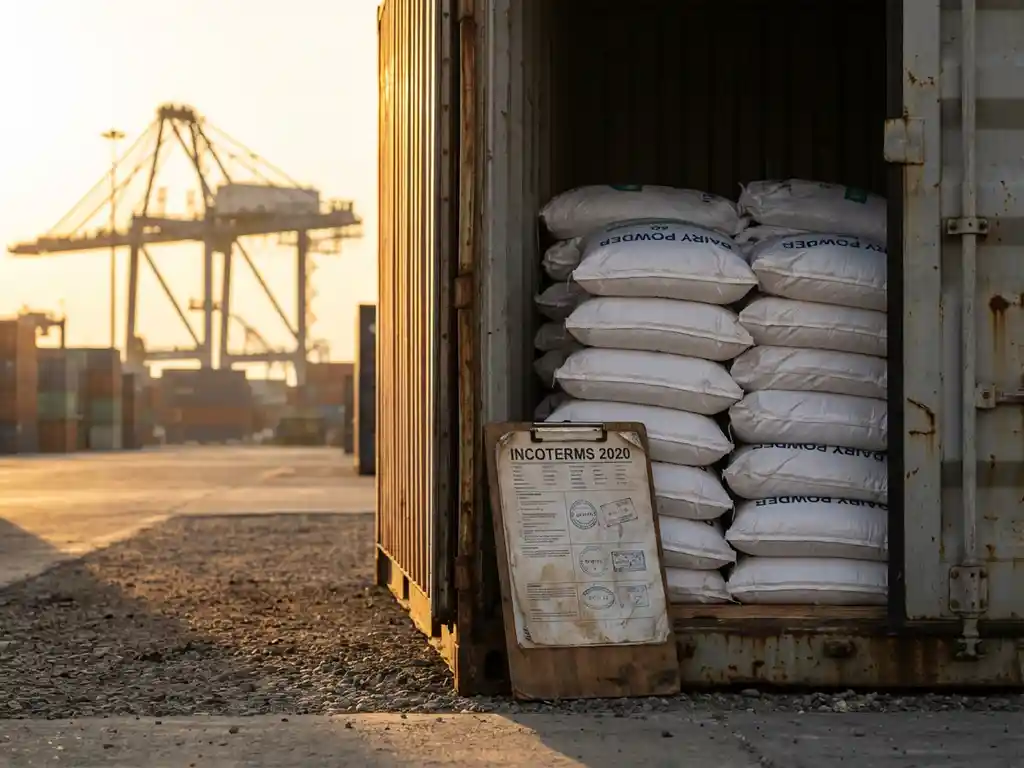
Incoterms are international commercial terms that define who pays for shipping, insurance, and customs duties in dairy ingredient transactions. For dairy traders dealing with bulk commodities such as milk powder, lactose, and whey protein, understanding these terms is essential for managing costs, risks, and profit margins in global trade agreements.
What are Incoterms, and why do dairy ingredient traders need to understand them?
Incoterms are standardised international commercial terms published by the International Chamber of Commerce that define the responsibilities of buyers and sellers in international trade contracts. These three-letter codes specify exactly who handles shipping, insurance, customs clearance, and risk transfer during transportation.
For dairy ingredient traders, Incoterms are crucial because they directly affect your profit margins and operational complexity. When you’re trading bulk quantities of milk powder, lactose, or whey protein internationally, these terms determine whether you’re responsible for arranging freight from the supplier’s facility or simply collecting the goods at your local port.
The terms also establish the precise moment when risk transfers from seller to buyer. This matters significantly when you’re dealing with temperature-sensitive dairy products that require specific handling conditions during transport. Understanding Incoterms helps you negotiate better deals, avoid unexpected costs, and ensure proper insurance coverage for your valuable commodity shipments.
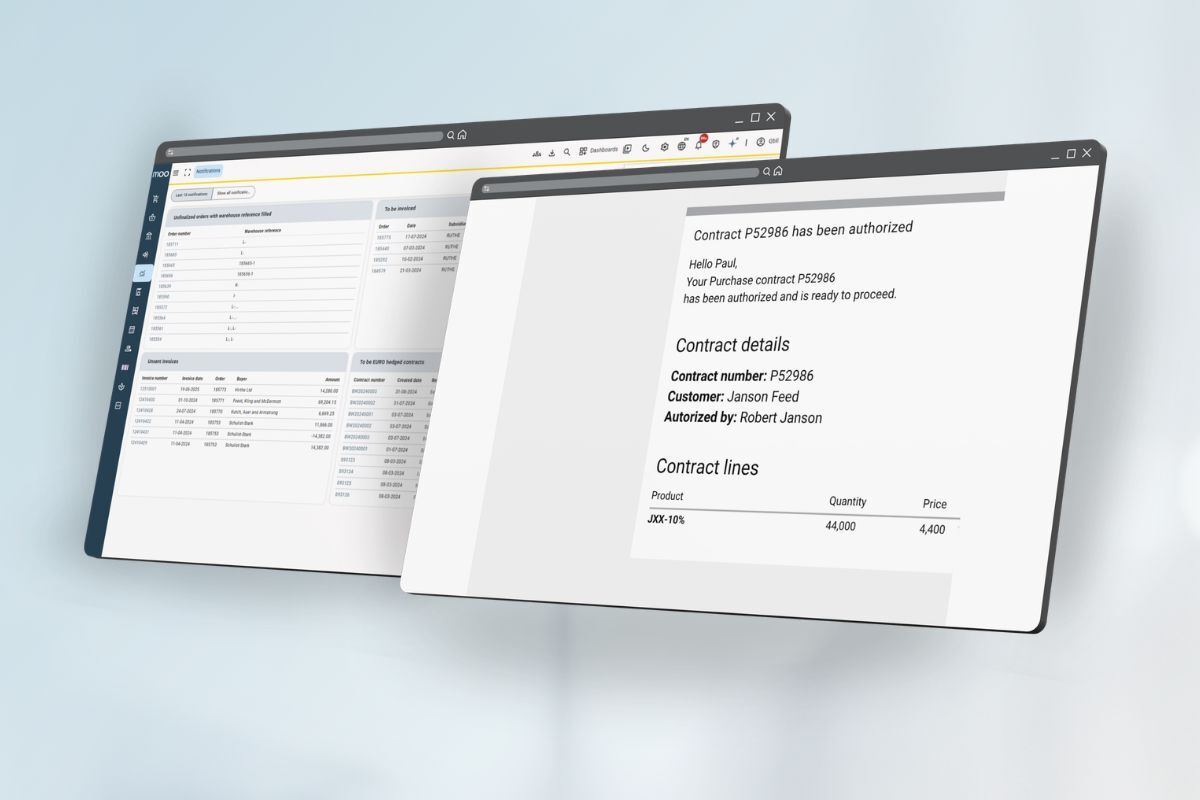
Modern dairy trading software can help track these various terms and their associated costs across multiple contracts, giving you better visibility into your true margins on each transaction.
Which Incoterms do dairy ingredient traders use most frequently?
Dairy ingredient traders primarily use FOB (Free On Board), CIF (Cost, Insurance and Freight), and EXW (Ex Works) for their bulk commodity transactions. These terms align well with typical shipping practices for products such as milk powder, lactose, and whey protein concentrates.
FOB is extremely popular because it gives traders control over freight arrangements while keeping the seller’s responsibilities clear. The seller delivers the goods to the port and handles export procedures, while you arrange and pay for ocean freight and insurance. This works well when you have established relationships with shipping companies or freight forwarders.
CIF appeals to many traders because it provides a complete delivered cost upfront. The seller arranges everything to your destination port, making budgeting straightforward. This term is particularly useful when dealing with suppliers in regions where you don’t have strong logistics connections.
EXW is common for regional European trade or when working with trusted suppliers. You collect the goods directly from the supplier’s facility, giving you maximum control over the entire logistics chain. This term often provides the best pricing but requires more operational involvement on your part.
How do different Incoterms affect your costs and responsibilities as a dairy trader?
Each Incoterm creates a different cost structure and risk profile that directly affects your trading margins. Understanding these differences helps you make better purchasing decisions and negotiate more effectively with both suppliers and customers.
Under EXW terms, you pay the lowest product price but handle all logistics costs, including trucking, export documentation, freight, insurance, and import duties. This gives you maximum control but requires strong operational capabilities and adds complexity to your cost calculations.
With FOB arrangements, your supplier handles export procedures and delivers the goods to the departure port, while you manage ocean freight, insurance, and import processes. This balanced approach works well for experienced traders who want cost control without excessive administrative burden.
CIF terms provide the highest upfront product cost but include freight and basic insurance to your destination port. You only handle import duties and local delivery. This simplifies budgeting but may result in higher overall costs, particularly if the supplier’s freight rates aren’t competitive.
The choice between terms often depends on your operational setup and market conditions. Traders with efficient logistics operations typically prefer FOB or EXW for better margins, while those focusing purely on trading activities often favour CIF for operational simplicity.
What’s the difference between FOB and CIF for dairy ingredient shipments?
FOB and CIF represent the two most common approaches to international dairy ingredient trading, with FOB giving you freight control while CIF provides a complete delivery service. Your choice between them significantly affects both your costs and operational involvement.
Under FOB terms, you arrange and pay for ocean freight and insurance from the departure port to your destination. This typically results in lower total costs because you can negotiate competitive freight rates, especially if you’re shipping regular volumes. You also choose the shipping line and departure schedule, giving you better control over delivery timing.
CIF terms mean your supplier arranges everything to your destination port, providing a single invoice that includes product cost, freight, and basic insurance. This simplifies your operations and provides predictable costs upfront, making financial planning easier. However, you may pay premium rates for freight and have less control over shipping schedules.
The practical implications extend beyond just costs. With FOB, you need relationships with freight forwarders and shipping lines, plus systems to track multiple shipments. CIF reduces this complexity but may limit your flexibility when market conditions change rapidly.
Most successful dairy ingredient traders use both terms strategically, choosing FOB for regular supply relationships where they can achieve freight economies, and CIF for opportunistic purchases or when dealing with distant suppliers where they lack logistics expertise.
Understanding these Incoterms thoroughly helps you negotiate better deals and manage risks more effectively in dairy ingredient trading. When implementing new trading arrangements, having proper systems in place to track costs and responsibilities across different terms becomes essential for maintaining profitability. If you’re looking to improve your contract and logistics management, we’d be happy to discuss how modern trading systems can help streamline these processes.
Frequently Asked Questions
How do I determine which Incoterm offers the best value for a specific dairy ingredient purchase?
Compare the total landed cost under each term by requesting quotes for EXW, FOB, and CIF from your supplier, then add your own freight and insurance costs for EXW and FOB options. Factor in your operational capacity - if you lack strong logistics relationships or time to manage shipments, the convenience of CIF may justify slightly higher costs. Consider your cash flow preferences too, as EXW and FOB require you to pay freight costs separately.
What happens if dairy products are damaged during transit under different Incoterms?
Under EXW, you're responsible for all damage once goods leave the supplier's premises. With FOB, risk transfers when goods cross the ship's rail at the departure port, so you handle any damage during ocean transit. Under CIF, the supplier's insurance covers damage until the destination port, but you need to check coverage limits and claim procedures. Always verify insurance terms and consider additional coverage for high-value dairy shipments.
Can I negotiate hybrid arrangements that combine elements of different Incoterms?
While Incoterms are standardized, you can negotiate modified terms in your contracts, but be very specific about responsibilities to avoid disputes. For example, you might agree to 'FOB plus insurance arranged by seller' or 'CIF with buyer-nominated freight forwarder.' However, using standard Incoterms reduces confusion and legal risks, so modifications should only be made when there's clear mutual benefit.
How do Incoterms affect payment terms and financing options for dairy ingredient purchases?
CIF terms often support letters of credit more easily since the seller controls the entire shipping process and documentation. FOB can complicate financing because you're arranging freight separately, potentially creating documentation gaps. EXW offers the least financing support since you handle all logistics. Consider how your chosen Incoterm aligns with your preferred payment method and discuss financing implications with your bank before finalizing terms.
What documentation do I need to prepare differently based on the Incoterm chosen?
Under EXW, you handle all export and import documentation including export licenses, bills of lading, and customs declarations. FOB means the supplier provides export documents while you manage import paperwork and freight documentation. With CIF, the supplier provides most shipping documents, but you still need to prepare for customs clearance at destination. Ensure your team understands these documentation requirements to avoid costly delays.
How should I handle quality control and inspection procedures under different Incoterms?
Regardless of the Incoterm, arrange for quality inspection before the risk transfers to you. For EXW, inspect at the supplier's facility before collection. With FOB, conduct inspection before goods are loaded onto the vessel. For CIF shipments, try to inspect at origin or ensure your contract includes quality guarantees that remain valid until destination. Consider using third-party inspection services for high-value dairy ingredient shipments.