
The ERP software Challenges of Trading Plant-Based Dairy Products
The market for plant-based dairy products is growing fast. From oat and soy drinks to almond yoghurts and plant-based desserts, traders are dealing with an increasingly diverse and complex product portfolio. While demand is booming, many plant-based dairy traders face significant challenges when it comes to their ERP software.
Generic ERP systems often struggle to keep up with the specific requirements of trading plant-based dairy commodities and ingredients. As a result, traders lose efficiency, visibility, and control at exactly the moment when margins and compliance matter most.
Managing Variable Ingredients and Product Compositions
One of the biggest challenges in plant-based dairy trade is the wide variety of raw materials and recipes. Ingredients such as soy, oats, almonds, coconut, or peas are used in countless combinations, each with its own specifications, shelf life, and quality requirements.
ERP software must be flexible enough to handle changing compositions, product variations, and batch differences. Without proper recipe and product configuration management, traders quickly end up with manual workarounds, spreadsheets, and inconsistent data — increasing the risk of errors and delays.
Traceability, Allergens, and Compliance
Traceability is critical in plant-based dairy trading. Allergens like nuts and soy, country of origin, and production details must be fully traceable to comply with food safety regulations and customer requirements.
An ERP system should offer end-to-end track & trace functionality, from raw material intake to final delivery. Traders need instant insight into batches, lots, and product flows to respond quickly to audits, recalls, or customer questions. When ERP systems lack this visibility, compliance becomes a daily struggle instead of a controlled process.
Contract and Price Volatility
Plant-based dairy traders operate in a highly dynamic market. Raw material prices fluctuate, contracts can be complex, and margins are under constant pressure. Managing purchase and sales contracts separately from logistics or finance creates blind spots in profitability.
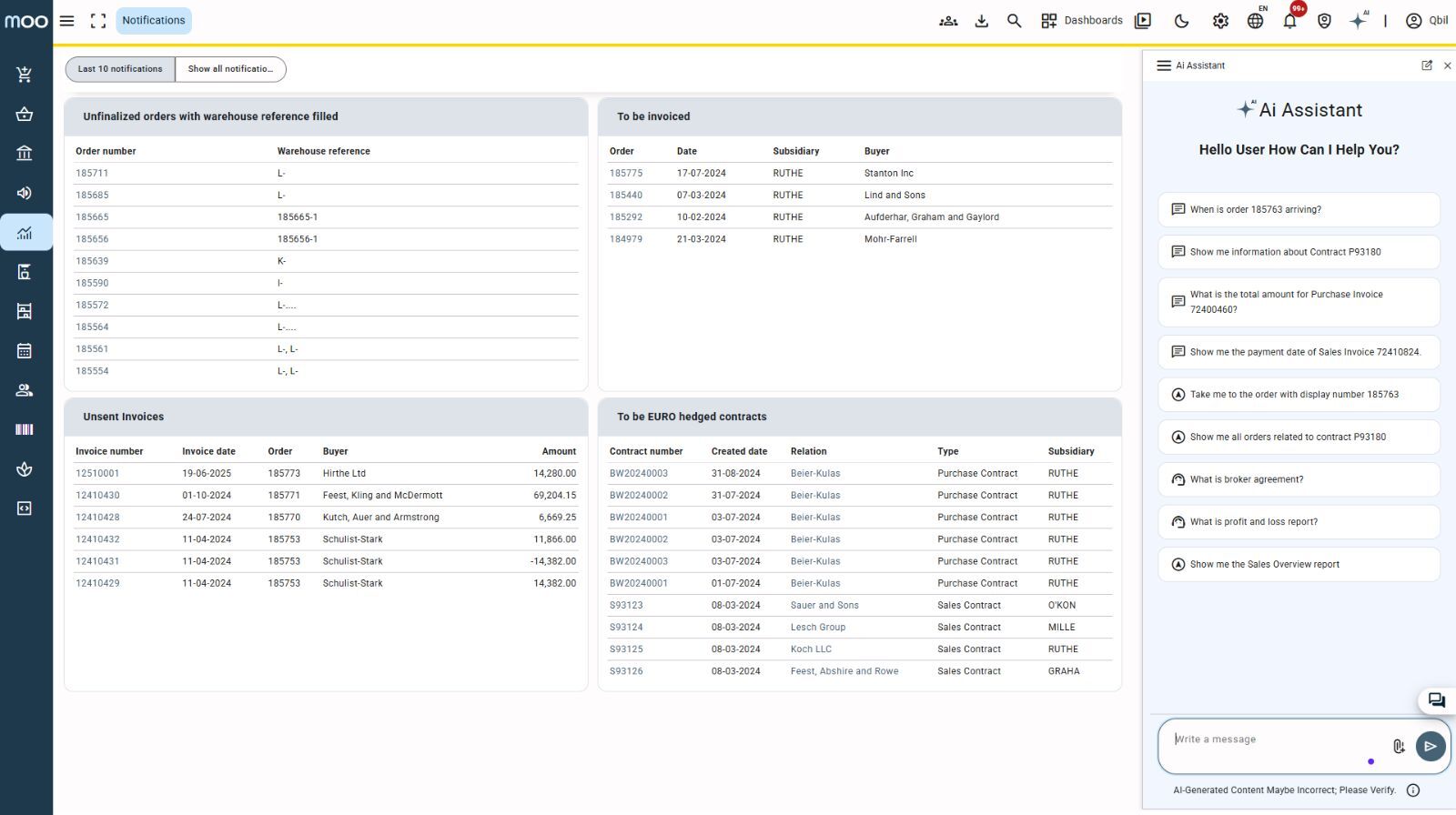
ERP software for plant-based dairy trade should integrate contract management, pricing, and financial insights into one system. This allows traders to monitor margins in real time, manage exposure, and respond faster to market changes — instead of discovering issues after the fact.
Logistics, Shelf Life, and Inventory Control
Unlike non-food commodities, plant-based dairy products come with strict shelf-life constraints and specific storage and transport requirements. Traders must balance availability, freshness, and delivery efficiency while keeping inventory levels under control.
Without an ERP system that supports smart inventory management and logistics planning, it becomes difficult to optimize stock, prevent waste, and meet delivery commitments. Real-time insight into inventory, expected arrivals, and outgoing shipments is essential to keep operations running smoothly.
Integration and Operational Efficiency
Many plant-based dairy traders still rely on disconnected systems for purchasing, sales, logistics, production, and finance. This leads to duplicated data entry, manual checks, and a higher risk of mistakes.
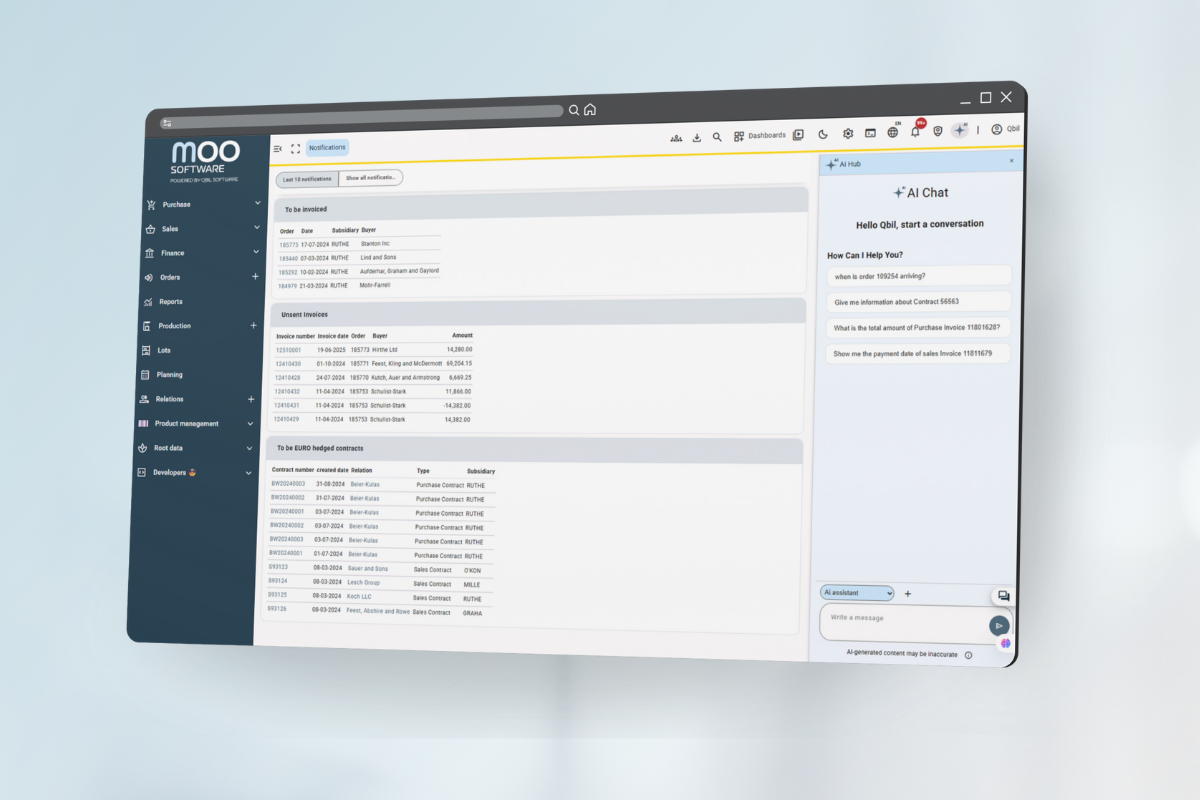
A modern ERP solution should bring all these processes together in one integrated platform. Automation, real-time dashboards, and seamless data flow help traders work faster, reduce errors, and make better decisions based on up-to-date information.
ERP Software as a Competitive Advantage
In a fast-growing and competitive market, ERP software is no longer just an administrative tool. For plant-based dairy traders, it is a strategic asset. The right ERP solution provides flexibility, transparency, and control across the entire supply chain — from ingredient sourcing to final invoicing.
By choosing ERP software that is tailored to the complexity of plant-based dairy commodities and ingredients, traders can scale their business, stay compliant, and protect margins in an increasingly demanding market.