
Accountants struggle with trading administration because commodity trading involves complex contract structures, multiple delivery periods, and real-time position tracking that traditional accounting methods aren’t designed to handle. Unlike standard business transactions, trading requires monitoring partial deliveries, managing multi-currency contracts, and maintaining accurate inventory positions across numerous simultaneous deals.
What makes trading administration so different from regular accounting?
Trading administration operates on fundamentally different principles than standard accounting because it involves managing live positions rather than completed transactions. Regular accounting records what has already happened, whereas trading administration must track what you’ve committed to buy and sell, what’s been delivered, and what remains outstanding.
The complexity stems from contract structures that span multiple months or even years. A single milk powder contract might involve 100,000 kilos delivered in 10,000-kilo batches over several months. Each delivery can have different pricing, quality specifications, and payment terms. Traditional accounting systems struggle because they’re built for straightforward purchase-to-payment cycles.
Multi-currency transactions add another layer of complexity. You might buy from a Dutch supplier in euros while selling to an Asian customer in US dollars, with exchange rates fluctuating throughout the contract period. This creates accounting challenges that standard bookkeeping practices simply weren’t designed to address.
Quality specifications further complicate matters. Unlike standard products, dairy ingredients often require blending, repackaging, or quality adjustments before delivery. These operations create additional transactions and inventory movements that must be tracked accurately for proper financial reporting.
Why do accountants find it difficult to track trading positions accurately?
Accountants struggle with position tracking because trading requires real-time visibility of commitments rather than historical transaction records. They need to know exactly how much has been bought versus sold at any given moment, which traditional accounting systems can’t provide effectively.
The challenge intensifies when dealing with partial deliveries and multiple contract variations. Imagine managing 50 different contracts, each with different delivery schedules, quality requirements, and pricing structures. Matching specific purchases to corresponding sales becomes nearly impossible without specialised systems.
Inventory management presents additional complications. Physical stock levels must align with contractual commitments, but traditional inventory systems don’t account for goods that are committed but not yet delivered. This creates discrepancies between what the books show and actual trading positions.
Cross-referencing becomes overwhelming when the same customer is also a supplier, which happens frequently in dairy trading networks. Standard accounting categories of “customer” and “supplier” break down when companies regularly switch roles depending on market conditions and available products.
How does Excel become a problem for growing trading businesses?
Excel becomes problematic because it requires manual updates for every transaction, delivery, and contract modification. What starts as a manageable spreadsheet for small operations quickly becomes an error-prone nightmare as trading volumes increase.
The real danger lies in the lack of real-time updates. Multiple team members often work from different versions of the same spreadsheet, creating conflicting information about positions, deliveries, and commitments. This leads to costly mistakes when traders make decisions based on outdated or incorrect data.
Version control becomes impossible as businesses grow. You might have separate spreadsheets for contracts, deliveries, invoicing, and inventory, with no automatic connections between them. When a delivery is made, someone must manually update multiple spreadsheets, increasing the risk of errors and omissions.
Reporting becomes increasingly time-consuming as accountants spend hours consolidating information from various Excel files. What should be instant position reports require manual compilation, often taking days to complete. This delay prevents timely decision-making in fast-moving commodity markets.
The lack of audit trails in Excel creates compliance issues. When accountants need to trace transactions or explain position changes, they must rely on email chains and manual notes rather than systematic records.
What specific accounting challenges do dairy and ingredient traders face?
Dairy traders face unique challenges because their products often require blending and repackaging operations that create complex inventory transformations. A trader might purchase bulk milk powder and sell it in smaller packages with different specifications, creating multiple accounting entries for a single commercial transaction.
Quality specifications add accounting complexity because the same product can have different values depending on protein content, fat levels, or other characteristics. Standard inventory systems struggle to track these variations accurately, making it difficult to value stock correctly.
The interconnected nature of dairy trading networks creates unusual accounting scenarios. Today’s customer might be tomorrow’s supplier, and the same company might simultaneously owe you money for one transaction while you owe them for another. Traditional accounting categories don’t handle these fluid relationships well.
Seasonal variations affect inventory valuation and contract pricing. Milk production fluctuates throughout the year, creating price volatility that must be reflected accurately in financial records. Accountants need systems that can handle these fluctuations while maintaining accurate position tracking.
Regulatory requirements for food safety and traceability add documentation burdens. Every batch must be traceable from source to final delivery, creating additional record-keeping requirements that standard accounting systems don’t address.
How can specialized trading software help accountants manage administration better?
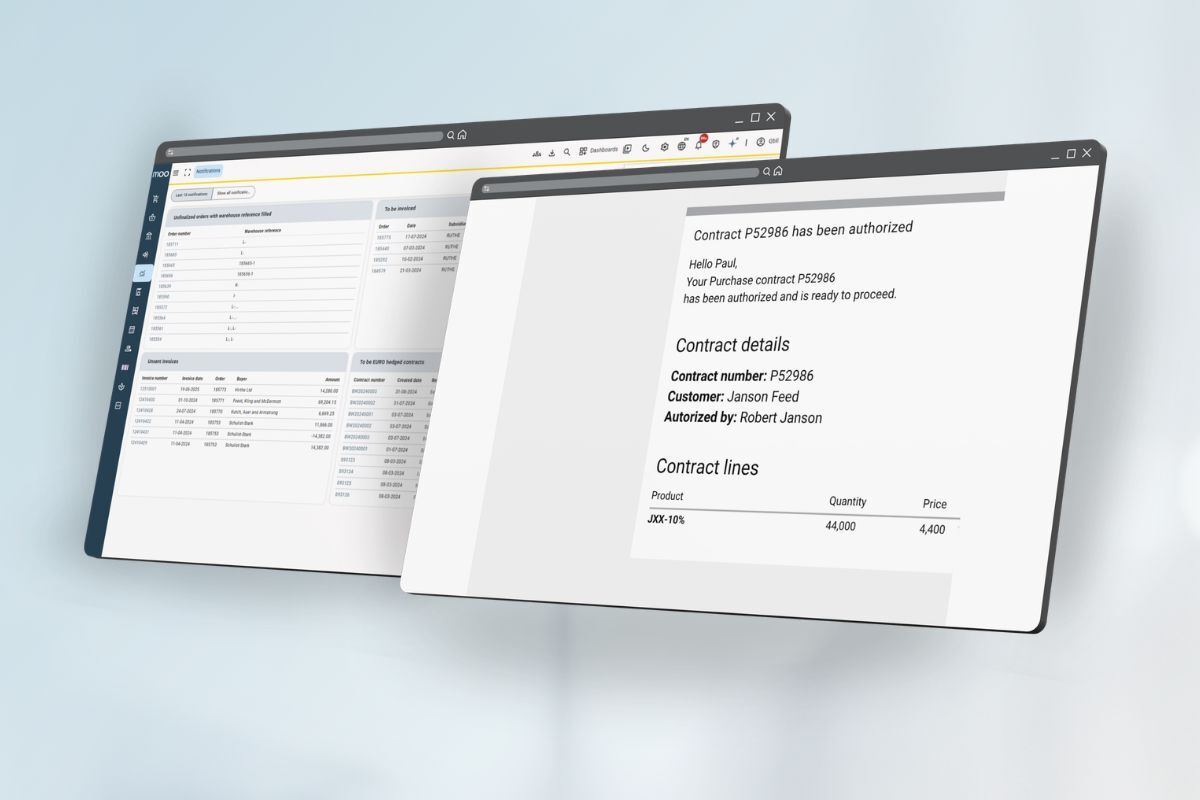
Software per il commercio di latticini addresses accounting challenges by automating transaction processing and providing real-time position tracking. Instead of manual spreadsheet updates, the system automatically records deliveries, updates positions, and maintains accurate inventory levels across all contracts.
Integrated contract management ensures that all commercial terms are reflected accurately in financial records. When a contract is modified or a delivery is made, the system automatically updates all related accounting entries, eliminating the manual work and errors associated with spreadsheet management.
Real-time reporting gives accountants instant access to position reports, profit analysis, and cash flow projections. What previously required hours of manual compilation is now available at the click of a button, enabling faster month-end closing and more timely financial reporting.
Automated connections to existing accounting systems eliminate double data entry. Modern dairy trading software can seamlessly integrate with your current bookkeeping system, automatically transferring transactions while maintaining the detailed trading information that accountants need.
Il processo di implementazione for specialised trading systems is typically straightforward, with most environments operational within days rather than months. This quick deployment means accountants can start benefiting from automated processes almost immediately.
Purpose-built systems understand the unique requirements of ingredient trading, handling quality specifications, blending operations, and multi-currency transactions as standard features rather than complex workarounds. This eliminates the constant manual adjustments that make traditional accounting so challenging for trading businesses.
Domande frequenti
How do I know if my trading business has outgrown Excel and needs specialized software?
Key warning signs include spending more than 2-3 hours daily updating spreadsheets, frequent discrepancies between different team members’ position reports, missing delivery deadlines due to poor tracking, or making trading decisions based on outdated information. If you’re managing more than 20 active contracts simultaneously or dealing with multiple currencies regularly, specialized software will likely provide immediate benefits.
What's the biggest mistake accountants make when trying to adapt standard accounting systems for trading?
The most common mistake is treating trading positions like standard inventory transactions. Accountants often try to force complex multi-delivery contracts into simple purchase-sale categories, leading to inaccurate position tracking and financial reporting. This approach fails because it doesn’t account for committed but undelivered quantities or the dynamic nature of trading relationships.
How long does it typically take to implement dairy trading software and see results?
Most modern dairy trading systems can be operational within 1-2 weeks, with full benefits realized within 30-60 days. The key is starting with your most active contracts and gradually migrating historical data. You’ll typically see immediate improvements in position accuracy and reporting speed, with month-end closing times often reduced by 50-70% within the first quarter.
Can trading software integrate with our existing accounting system, or do we need to replace everything?
Quality trading software is designed to integrate seamlessly with existing accounting systems like QuickBooks, Sage, or Xero. The trading system handles the complex position management and contract tracking, then automatically transfers summarized transactions to your accounting system. This means you keep your familiar bookkeeping processes while gaining specialized trading functionality.
What happens to our historical trading data when we switch from Excel to specialized software?
Reputable trading software providers offer data migration services to transfer your existing Excel data into the new system. This typically includes contract details, delivery records, and position information. While complete historical migration might take a few weeks, you can start using the new system immediately for current contracts while the migration happens in the background.
How do I handle the learning curve for my accounting team when implementing new trading software?
Most dairy trading software is designed with accountants in mind, featuring intuitive interfaces that mirror familiar accounting concepts. Training typically takes 2-3 days for basic functionality, with ongoing support available. Start by having your most tech-savvy team member learn the system first, then have them train others. The time investment pays off quickly through reduced manual work and fewer errors.
What should I look for when evaluating different dairy trading software options?
Focus on systems that offer real-time position tracking, automated delivery matching, multi-currency support, and quality specification management. Ensure the software can handle your specific products and contract types. Most importantly, verify that it integrates with your existing accounting system and offers responsive customer support, as you’ll need assistance during the initial setup period.