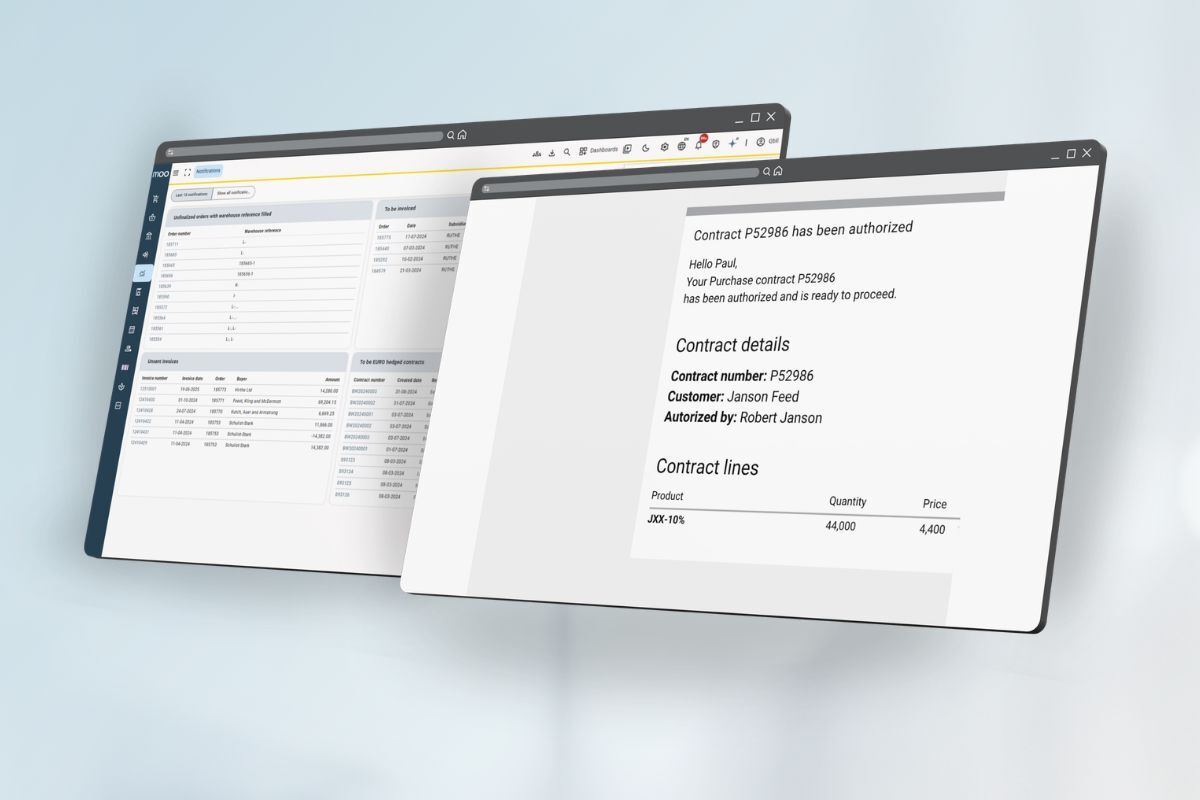
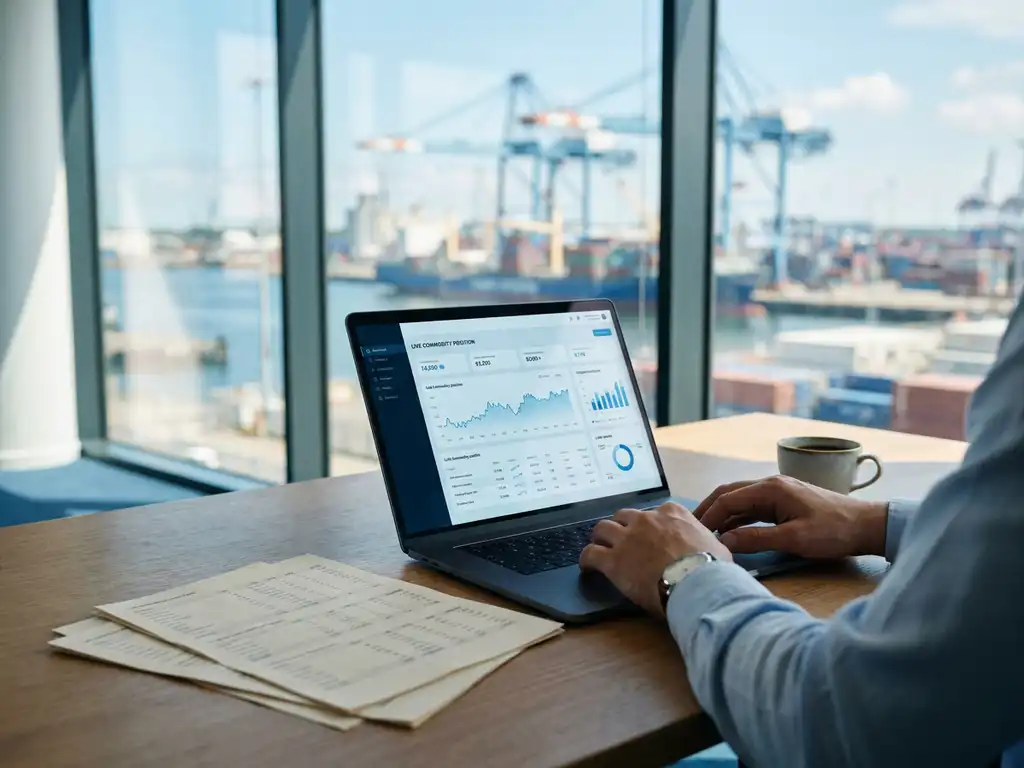
You get a real-time overview of your trading positions by connecting your contracts, orders, inventory, and logistics into a single system that updates automatically as transactions happen. When all of that data lives in one place, your position reflects reality at any given moment rather than the last time someone updated a spreadsheet. The sections below break down exactly why this matters, what a live position actually includes, and how dairy traders can get there.
Why do trading positions change faster than spreadsheets can track?
Trading positions change the moment a contract is signed, an order is confirmed, a delivery is made, or a price is adjusted. Spreadsheets are static by design: they only reflect what someone has manually entered, and they do not update themselves when something changes elsewhere. In a fast-moving dairy trading environment, that lag between reality and what your spreadsheet shows can be measured in hours or days.
In dairy ingredient trading, multiple things happen simultaneously. A new purchase contract arrives while a logistics partner confirms a shipment. A customer adjusts their order while a currency rate shifts. Each of these events affects your open position, but in a spreadsheet-based setup, none of them register until someone sits down and enters the data. By the time that happens, the picture is already out of date.
This is the core problem with Excel vs trading software: Excel is a tool built for analysis and reporting, not for live operational tracking. It was never designed to be updated by multiple people at once, to pull in data from other systems, or to recalculate your exposure automatically. Dairy trading, by contrast, is inherently multi-person, multi-system, and real-time. The mismatch is structural, not just a matter of discipline or better formulas.
What does a real-time trading position actually include?
A real-time trading position is a live snapshot of everything you have bought and sold, what has been delivered and invoiced, what is still open, and what your net exposure is at this moment. It combines contract data, order status, inventory levels, and financial obligations into a single, continuously updated view.
More specifically, a complete position overview for a dairy trader typically includes:
- Open purchase and sales contracts with quantities, prices, and delivery windows
- Confirmed orders that are in progress but not yet delivered
- Inventory on hand including goods in transit and goods in storage
- Invoiced and uninvoiced volumes so you know what has been financially settled
- Net position per product showing whether you are long, short, or balanced
Without all of these components updating together, your position view is partial. Knowing your stock level but not your open sales contracts, for example, tells you very little about your actual exposure. A real position overview is only meaningful when all of these data points are connected and current.
How do dairy traders typically lose track of their positions?
Dairy traders most commonly lose track of their positions when data is spread across separate files, inboxes, and systems that do not communicate with each other. It starts simply: one spreadsheet for contracts, another for orders, a separate file for stock, and email threads for logistics updates. Over time, the number of files grows, and the connections between them become fragile.
The most common failure points are easy to recognize:
- A contract is updated in one file but the change is not reflected in the stock planning file
- A delivery is confirmed by email but nobody updates the inventory spreadsheet in time
- Two colleagues work from different versions of the same file without realizing it
- A copied formula carries a quiet error that distorts totals for weeks before anyone notices
None of these are signs of carelessness. They are the natural result of using tools that were not built for this kind of operational tracking. The problem compounds as a business grows. With two or three people, informal coordination works. With five, ten, or more, the same approach creates gaps that are hard to see until something goes wrong: a missed delivery, a double-sold position, or a customer complaint that traces back to data nobody trusted enough to act on.
What’s the difference between a position overview and a stock overview?
A stock overview shows what you physically have on hand right now. A position overview shows your total exposure, including what you have committed to buy or sell in the future, what is in transit, and what has been invoiced. Stock is a subset of position. Knowing your stock level without knowing your open contracts gives you an incomplete and potentially misleading picture.
To make this concrete: you might have 20 tonnes of milk powder in your warehouse. Your stock overview says 20 tonnes available. But if you have already sold 15 tonnes under a contract that has not yet been invoiced, your actual available position is 5 tonnes. If you also have a purchase contract arriving next week for another 10 tonnes, your forward position is 15 tonnes. These are very different numbers, and confusing stock for position is one of the most common sources of trading errors in smaller dairy businesses.
This distinction matters especially when making new trading decisions. Buying or selling based on stock data alone, without factoring in open contracts and committed volumes, is how traders end up either overselling or sitting on more inventory than they planned for.
How does connected software give you a live position view?
Connected software gives you a live position view by linking every part of your operation into a single data environment. When a contract is entered, it immediately affects your position. When an order is confirmed, the relevant quantities are updated. When a delivery is logged, the inventory adjusts. Every step feeds the same position calculation automatically, without anyone having to manually reconcile separate files.
This is the practical difference in the Excel vs trading software comparison that matters most: it is not just about having a neater interface. It is about whether your data updates itself or requires human intervention at every step. In a connected system, the position you see at 9 in the morning reflects everything that happened yesterday afternoon, every contract confirmed overnight, and every delivery logged by your logistics partner. In a spreadsheet setup, it reflects whatever was last entered by hand.
Il nostro software per il commercio di latticini is built around exactly this principle: contracts, orders, inventory, and financials all live in one system, so your position is always current. There is no separate reconciliation step, no version control problem, and no risk that two colleagues are working from different data. When you look at your position, you are looking at the same picture everyone else in your business sees.
When should a dairy trading company invest in position management tools?
A dairy trading company should invest in position management tools when the cost of not having them becomes visible in daily operations. That typically happens earlier than most businesses expect. The clearest signals are not dramatic failures but quiet, recurring friction: decisions delayed because the data is not trusted, time spent reconciling files instead of trading, and a growing sense that nobody has a complete overview at any given moment.
More specifically, it is time to move beyond spreadsheets when:
- More than one person needs to access or update trading data regularly
- You are managing contracts across multiple product lines or markets
- You have had at least one incident where incorrect position data led to a real operational problem
- Preparing a position overview takes more than a few minutes of manual work
- You are growing, and the current setup is already showing strain
The good news is that getting started does not require a long or expensive implementation. A system purpose-built for dairy ingredient trading can be fully operational quickly, and a flexible pricing structure means you pay for what you actually use rather than committing to a large upfront investment. If you are unsure whether your current setup is holding you back, talking to us is a straightforward way to find out.
Domande Frequenti
Can I migrate my existing spreadsheet data into a dairy trading software without losing historical records?
Yes, most purpose-built dairy trading platforms are designed to import historical data from spreadsheets during onboarding. Your past contracts, order history, and inventory records can typically be mapped and transferred so you start with a complete picture rather than a blank slate. It is worth asking any software provider specifically about their data migration process before committing, as the quality and level of support offered can vary.
What happens to my position view if a logistics partner is late to confirm a delivery?
In a connected system, your position will reflect the last confirmed status until the delivery update is logged — which means the accuracy of your live view depends partly on how quickly your logistics partners report back. The best practice is to establish clear communication protocols with your partners so that delivery confirmations are entered promptly, either by your team or directly by the partner if the system allows external input. Some platforms also support automated status updates via integrations with logistics providers, which reduces this dependency significantly.
How do I handle multi-currency exposure in a real-time position overview?
A well-built dairy trading system will factor currency into your position calculations by applying current or locked exchange rates to contracts denominated in foreign currencies, giving you exposure figures in your base currency. This is one of the areas where spreadsheets break down most visibly, since manually updating rates across multiple files introduces both lag and error risk. When evaluating software, confirm whether exchange rate updates are automatic or manual, and whether the system can show you currency-specific exposure breakdowns when needed.
Is a real-time position overview useful for smaller dairy trading businesses, or is it mainly for large operations?
Real-time position management is arguably more critical for smaller businesses, not less, because smaller teams have fewer people available to catch errors before they become costly problems. A two-person trading operation that double-sells a position or misreads its stock exposure faces the same financial consequences as a larger company, but with less margin to absorb the impact. The good news is that modern dairy trading software is increasingly priced and structured for businesses of all sizes, so the tools that were once only accessible to large traders are now practical for growing independents as well.
What are the most common mistakes companies make when first switching from spreadsheets to trading software?
The most common mistake is trying to replicate the exact structure of existing spreadsheets inside the new system rather than adopting the workflows the software is designed around. This often leads to underusing the platform and carrying over the same inefficiencies in a new wrapper. A closely related mistake is running the old spreadsheet system in parallel for too long out of caution, which creates a dual-entry burden and delays the point at which the team actually trusts the new data. The cleanest transitions happen when a business commits to the new system as the single source of truth from day one.
How quickly can a dairy trading team realistically get up and running on a new position management system?
For a purpose-built dairy trading platform, a small to mid-sized team can typically be fully operational within a few days to a couple of weeks, depending on the complexity of the product range and how much historical data needs to be migrated. Unlike generic ERP systems that require lengthy configuration, software built specifically for dairy ingredient trading comes with the relevant workflows and terminology already in place. The onboarding timeline is much shorter than most businesses expect, which means the return on investment starts showing up quickly.
How do I know if the position data I'm seeing in the software is actually trustworthy?
Trust in your position data comes down to two things: whether the system is genuinely connected across all relevant data sources, and whether your team has consistent habits around entering updates promptly. A connected system eliminates the reconciliation problem, but it still requires that contracts, orders, and deliveries are logged in a timely way. Most trading platforms include audit trails or activity logs that let you see when each record was last updated and by whom, which makes it easy to spot any gaps in data entry discipline and address them before they affect decision-making.