Dairy trading companies lose money on logistics errors primarily because those errors are invisible until they become expensive. A wrong delivery date, a misread contract term, or a shipment sent to the wrong location does not announce itself as a problem the moment it happens. It surfaces later, often after a customer has already escalated, a payment has been delayed, or a perishable product has been compromised. For smaller dairy trading businesses, the underlying cause is almost always the same: critical information lives in too many places, none of which talk to each other in real time. The sections below break down exactly where these losses occur and what can realistically be done about them.
What types of logistics errors cost dairy traders the most?
The logistics errors that cost dairy traders the most are delivery scheduling mistakes, incorrect product specifications on shipment documents, and quantity discrepancies between contracts and actual deliveries. These three categories share a common trait: they are easy to miss during execution and expensive to correct after the fact, particularly when perishable dairy ingredients are involved.
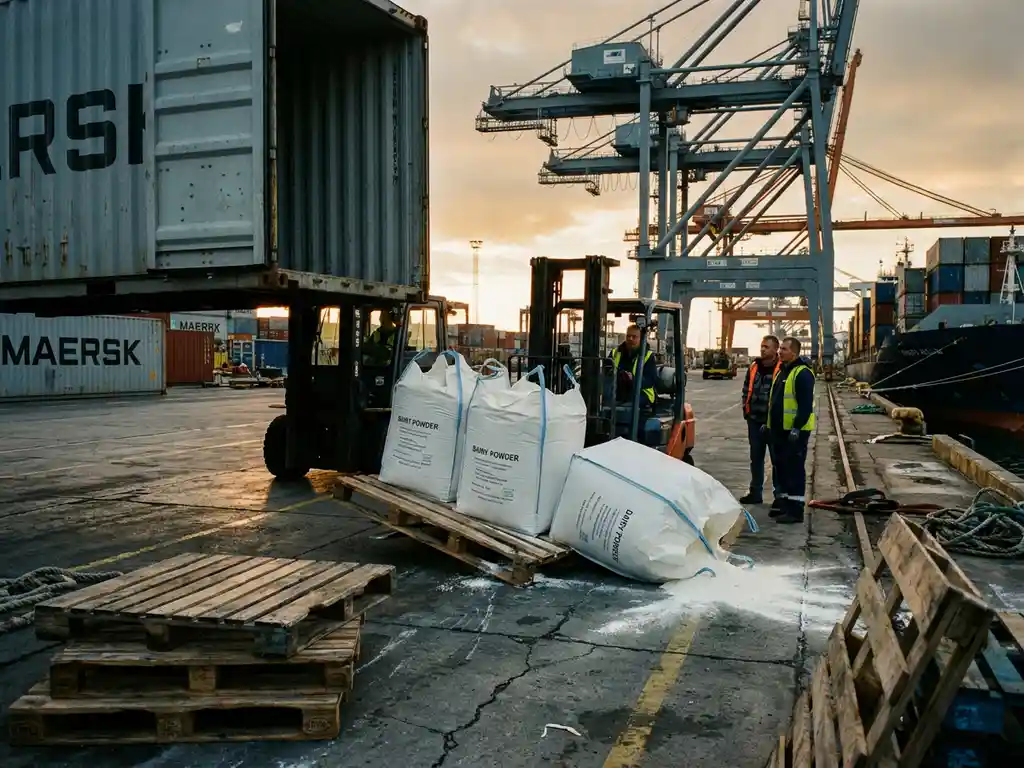
Delivery scheduling mistakes are perhaps the most common. When a trader is coordinating multiple contracts across different buyers and suppliers, a date entered incorrectly in a spreadsheet or noted in a separate email chain can result in a shipment arriving at a warehouse that is not expecting it. Refrigerated storage is not always available on short notice, and the cost of rerouting or storing temperature-sensitive goods quickly erodes margin.
Incorrect product specifications on shipping documents create a different kind of problem. Milk powder grades, fat content percentages, and certifications such as organic or non-GMO are not interchangeable. A document error that swaps one specification for another can trigger a customs hold, a customer rejection, or a full product return. The financial impact is direct, but the reputational damage to a small trading company can be even more lasting.
Quantity discrepancies between what was contracted and what was shipped are often the result of manual data entry across multiple files. When the contract is in one spreadsheet, the order confirmation is in an email, and the shipping instruction is typed up separately, small differences accumulate. A missing pallet or an overbooking that only becomes visible at the invoice stage is a problem that takes hours to untangle and often results in credit notes, disputes, or delayed payment.
Why do small dairy trading companies struggle to catch errors in time?
Small dairy trading companies struggle to catch logistics errors in time because their operational data is fragmented across spreadsheets, email threads, and personal notes, making it impossible to see the full picture at a glance. When no single source of truth exists, errors can sit undetected for days, and by the time they surface, corrective action is no longer practical.
This is not a matter of carelessness. Most people running a small dairy trading operation are experienced, detail-oriented professionals. The problem is structural. Spreadsheets are static by design. They reflect the moment they were last updated, not the current state of a shipment, a contract, or a position. In a business where conditions change multiple times a day, that lag is a genuine operational risk.
The situation becomes more fragile as the business grows. A sole trader managing five contracts can hold most of the details in their head and catch inconsistencies quickly. Add a second person, a third supplier relationship, or a new product category, and the mental map becomes unreliable. Files multiply, versions diverge, and the question “which spreadsheet is current?” becomes a daily friction point. By the time an error is discovered, it has often already affected a delivery, a customer relationship, or a margin calculation.
How does a single contract mistake ripple through a dairy trade?
A single contract mistake in dairy trading can ripple through an entire transaction chain, affecting logistics scheduling, invoicing, inventory positions, and customer relationships in sequence. Because each step in a dairy trade depends on the accuracy of the step before it, one incorrect detail compounds rather than stays contained.
Consider a straightforward example. A purchase contract is entered with the wrong delivery window, perhaps a week earlier than agreed. The logistics instruction is created from that contract, so the transport booking reflects the wrong date. The supplier is not ready, the buyer is not expecting the goods, and the warehouse has scheduled a different inbound delivery for that slot. Resolving this requires phone calls, revised documents, potential rebooking fees, and a customer explanation. None of that work was planned, and all of it costs time and money.
The financial ripple extends further. If the contract error also affects the price or quantity, the invoice will be wrong. A disputed invoice pauses payment. A paused payment affects cash flow. For a small trading company operating on relatively tight margins across a high volume of transactions, a single chain of this kind can meaningfully affect a month’s financial result.
What makes this particularly difficult in dairy trading is that the timeline is often short. Dairy ingredients, especially fresh or short-shelf-life products, do not allow weeks of back-and-forth to resolve a documentation problem. The pressure to act quickly often means problems are patched rather than properly resolved, and the underlying process that caused them remains unchanged.
What’s the difference between a logistics error and an operational process failure?
A logistics error is a specific, identifiable mistake in a single transaction, such as a wrong delivery date or an incorrect quantity on a shipping document. An operational process failure is the systemic condition that makes those errors likely to happen repeatedly, such as relying on manual data entry across disconnected files with no validation or cross-check built in.
This distinction matters because treating a logistics error as a one-off event leads to the wrong response. Apologising to the customer, issuing a credit note, and moving on does not address the process that produced the error. The same mistake will recur, perhaps in a different transaction or with a different product, because the conditions that allowed it have not changed.
Operational process failures in dairy trading typically look like this: contracts are stored in one file, orders in another, logistics instructions in email, and invoices in an accounting system that has no connection to any of the above. Each handoff between these systems is a manual step, and every manual step is an opportunity for a discrepancy to enter the chain. The individual steps may look reasonable in isolation. The problem is the gap between them.
Recognising the difference between a logistics error and an operational process failure is often the moment a dairy trading company starts asking whether their current setup is actually working, or just working well enough that the failures have not yet been costly enough to force a change.
How can dairy trading companies reduce logistics errors without hiring more staff?
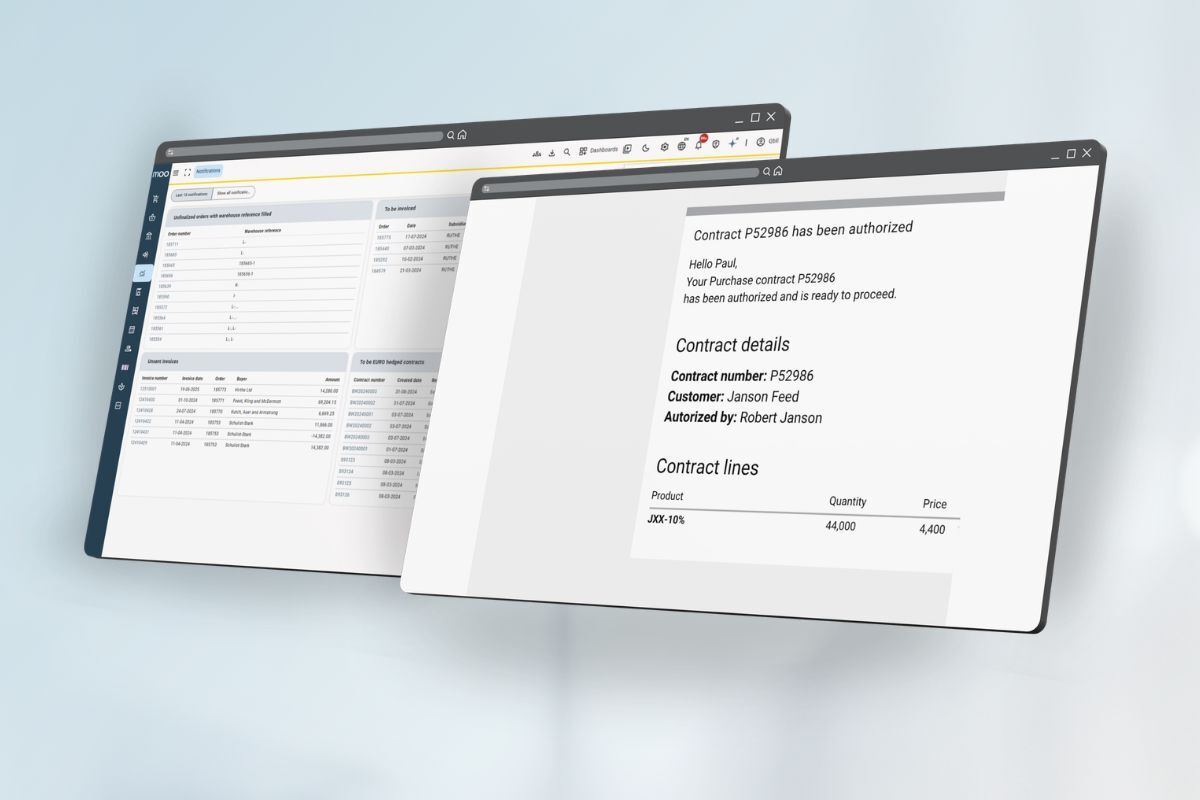
Dairy trading companies can reduce logistics errors without hiring more staff by connecting their contract, order, and logistics data into a single system where information flows automatically from one step to the next. When a contract update is reflected immediately in the logistics instruction and the invoice, the manual handoffs that introduce errors are removed rather than managed.
The most practical starting point is eliminating the gap between where contracts are recorded and where shipments are instructed. In many small trading businesses, these are separate documents, often created by different people at different times. When they are generated from the same source record, the scope for discrepancy narrows significantly. The same logic applies to the connection between shipment data and invoicing. If an invoice is generated from confirmed delivery data rather than typed up from a separate document, quantity and price errors at the invoice stage become far less likely.
Real-time visibility into positions and open contracts also plays a direct role in reducing logistics errors. When a trader can see at a glance what is contracted, what has shipped, and what is still open, they can catch mismatches before they become delivery problems. This kind of overview is structurally impossible in a spreadsheet environment, not because spreadsheets are poorly designed, but because they were never built to reflect a live, multi-person operation.
This is exactly the gap that Moo Software was built to close. We developed our ERP specifically for dairy ingredient and commodity traders, connecting contracts, orders, logistics, and financials in one system designed around how this industry actually operates. There is no need to rebuild processes from scratch or invest months in implementation. Your environment can be fully operational within two days, which means the reduction in manual errors starts almost immediately rather than after a lengthy setup period.
For trading companies that have grown beyond what spreadsheets can reliably support, the comparison is not really Excel vs trading software as a philosophical debate. It is a practical question about whether the current setup is producing errors at a rate that is acceptable, and whether those errors are costing more than a structured alternative would. If you are at that point and want to understand what a purpose-built solution would look like for your operation, we are easy to reach.
Domande Frequenti
How quickly can a dairy trading company realistically see a reduction in logistics errors after switching to a centralised system?
Most dairy trading companies begin seeing measurable improvements within the first few weeks of using a centralised system, simply because the manual handoffs that introduce errors are eliminated from day one. The biggest early gains tend to come from the contract-to-logistics connection, where discrepancies in dates, quantities, and specifications previously went undetected until delivery. If your system can be operational within a couple of days, as is the case with purpose-built solutions like Moo Software, the error reduction starts almost immediately rather than after a lengthy transition period.
What should a dairy trader do immediately after discovering a logistics error mid-shipment?
The first priority is to contain the impact: contact the carrier, the buyer, and the warehouse as early as possible to assess whether rerouting, rescheduling, or temporary storage is still a viable option. Simultaneously, document exactly where in the process the error originated, whether it was a data entry mistake, a miscommunication between documents, or a version control issue, so the root cause is captured while it is still fresh. Resolving the immediate problem without recording what caused it means the same error is likely to recur in a future transaction.
Are there specific dairy product categories where logistics errors are more costly or harder to recover from?
Yes. Short-shelf-life products such as fresh cream, liquid milk, and certain cultured dairy ingredients carry the highest risk because the window for corrective action is extremely narrow. A scheduling error on a bulk milk powder shipment may allow a day or two to regroup, but a misdirected fresh product delivery can result in a total write-off with no recovery path. Specialty products with strict certification requirements, such as organic or halal-certified dairy ingredients, also carry elevated risk because a documentation error can trigger customs holds or outright customer rejection regardless of the product's physical condition.
How do you know when your operation has genuinely outgrown spreadsheets, rather than just needing better spreadsheet discipline?
A reliable indicator is when errors begin occurring not because of individual carelessness but because two people are working from different versions of the same file, or because a change in one document is not reflected in another. If you are spending meaningful time each week reconciling data between your contracts, your logistics instructions, and your invoices, that is a structural problem, not a discipline problem. Another clear signal is when a new team member or a new product category noticeably increases your error rate, because it means your process has no built-in safeguards and relies entirely on individual memory and attention.
Can integrating contract and logistics data also help with supplier disputes, not just customer-facing errors?
Absolutely. When your purchase contracts, delivery confirmations, and quantity records all live in the same system, you have an accurate, timestamped record of what was agreed versus what was received. This makes supplier disputes significantly easier to resolve because you are not reconstructing events from a chain of emails or comparing two different spreadsheets. It also acts as a deterrent, since both parties know the records are clear and consistent, which tends to shorten the dispute resolution cycle and protect your margins on the buy side as well as the sell side.
Is it worth fixing internal processes before investing in software, or should both happen at the same time?
For most small dairy trading companies, waiting until processes are fully optimised before adopting software is a false prerequisite that delays the benefits indefinitely. Purpose-built trading software is typically designed around the workflows that already exist in the industry, meaning it structures and validates your current process rather than requiring you to redesign it first. That said, it is worth mapping your key transaction steps, from contract entry through to invoice, before implementation so you can configure the system to reflect how your business actually operates rather than a generic template.
What is the most common mistake dairy trading companies make when trying to reduce logistics errors on their own?
The most common mistake is treating each error as an isolated incident and responding with a fix at the symptom level, such as adding a manual checklist or asking staff to double-check a specific field, without addressing the underlying process gap. Checklists and verification steps can help in the short term but add friction and rely on consistent human execution, which is precisely the variable that breaks down under volume or time pressure. A more durable approach is to reduce the number of manual handoffs in the process itself, so that fewer steps depend on individual attention to catch errors before they propagate.