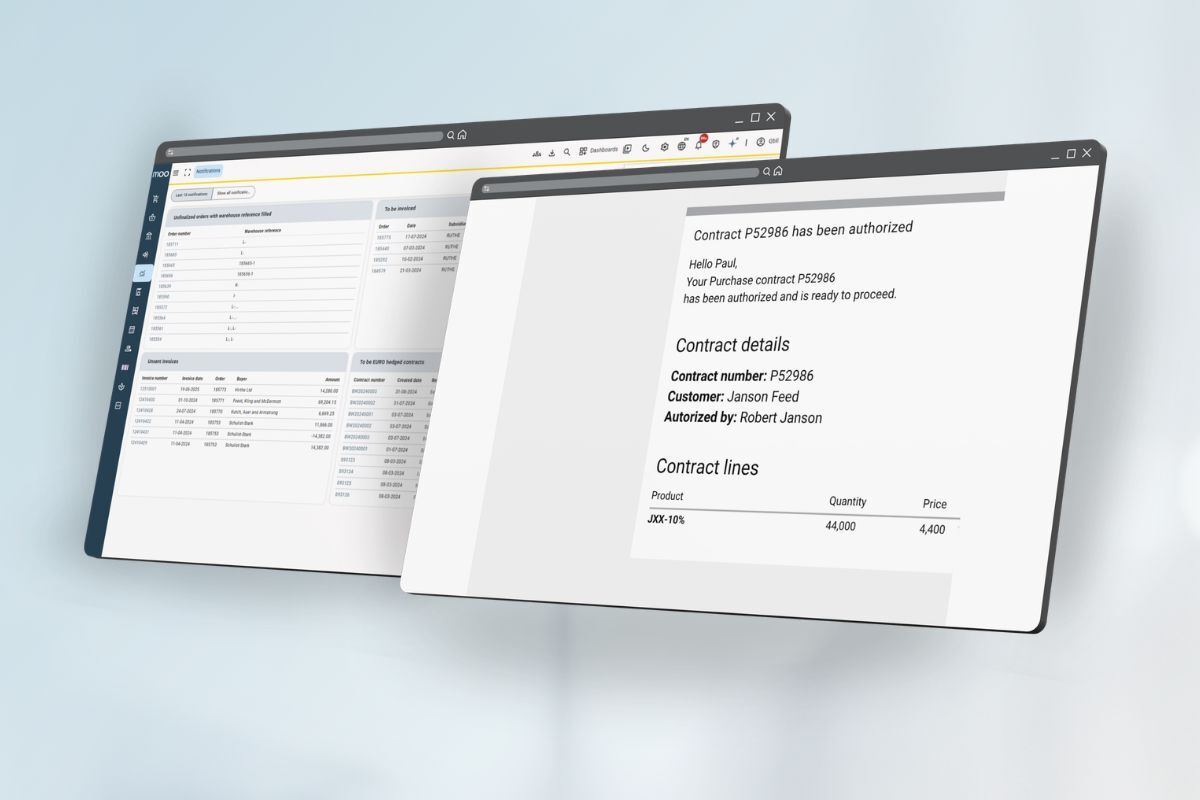

ERP software for the dairy industry provides specialized tools for managing contracts, inventory, and trading positions in real time. Unlike generic systems, dairy-focused ERP solutions handle the unique complexities of commodity trading, ingredient specifications, and multi-stage delivery processes. These systems streamline operations while supporting business growth through better oversight and automated processes.
What is ERP software, and why does dairy trading need specialized systems?
ERP (Enterprise Resource Planning) software integrates business processes into one connected system, managing everything from contracts to financials. Dairy trading requires specialized ERP systems because generic solutions cannot handle commodity-specific needs such as real-time position tracking, complex supplier-customer relationships, and ingredient specification management.
Dairy ingredient traders operate in a unique environment where the same company might be both a customer and a supplier. They handle bulk commodities such as milk powder, lactose, and whey proteins, with specific quality requirements and delivery schedules. Generic ERP systems lack the functionality to track positions effectively—knowing exactly how much you’ve bought versus sold is crucial when operating on thin margins.
Specialized dairy ERP systems recognize that a single contract might involve multiple deliveries over several months, each requiring different specifications. They handle the complexity of ingredient blending, repackaging, and quality certifications that standard business software simply cannot manage. The trading nature of the business demands real-time visibility that generic systems fail to provide.
How does ERP software streamline daily operations in dairy trading?
Specialized ERP systems automate contract management, order processing, and inventory tracking while connecting seamlessly with existing accounting systems. This automation significantly reduces manual work, allowing traders to focus on relationship building and strategic decisions rather than administrative tasks.
Daily operations in dairy trading involve constant communication with suppliers and customers through phone calls, emails, and messaging. ERP software centralizes this information, automatically updating positions when new contracts are entered or deliveries are scheduled. Instead of managing multiple spreadsheets, traders get a single view of their entire operation.
The software handles complex scenarios such as partial deliveries, quality adjustments, and contract modifications without losing track of overall positions. Financial integration means invoicing and payment tracking happen automatically, reducing errors and improving cash flow management. This streamlined approach allows businesses to handle more transactions without proportionally increasing administrative overhead.
What growth challenges can ERP software solve for dairy trading businesses?
ERP systems solve critical scaling obstacles, including loss of position oversight, complex relationship management, and maintaining profitability as transaction volumes increase. Growing dairy trading businesses often struggle when Excel-based systems become inadequate for their expanding operations.
The most common growth challenge occurs when traders lose clear visibility of their positions. As business volume increases, tracking what’s been bought versus sold becomes increasingly difficult without proper systems. This lack of oversight can lead to overcommitment or missed opportunities, both of which are costly in commodity trading.
Managing the web of supplier-customer relationships becomes more complex as businesses grow. The same contacts often fulfill multiple roles, and keeping track of ongoing negotiations, contract terms, and delivery schedules requires more than spreadsheets can provide. ERP systems maintain relationship history and contract details, ensuring nothing falls through the cracks during busy periods.
Maintaining profitability on thin margins requires precise cost tracking and position management. As businesses scale, manual processes introduce errors that can eliminate profit margins entirely. Automated systems ensure accuracy while providing the real-time data needed for profitable decision-making.
How do you choose the right ERP system for a growing dairy trading business?
Choose dairy-specific ERP systems that offer real-time position tracking, flexible pricing, and quick implementation rather than generic solutions that require extensive customization. Look for systems designed specifically for commodity trading, with features that match how dairy ingredient businesses actually operate.
Key features to prioritize include contract management that handles multiple deliveries and specifications, position tracking that provides real-time buy-versus-sell visibility, and integration capabilities with existing accounting systems. The system should understand dairy industry terminology and workflows rather than requiring you to adapt your processes to generic software.
Implementation considerations matter significantly for growing businesses. Look for solutions that can be operational within days rather than months, allowing you to start benefiting immediately. Professional implementation support ensures smooth transitions, with proper training and data conversion handled by experts.
Scalability factors include flexible pricing that grows with your business and the ability to add users as needed. Ask potential providers about their experience with dairy trading specifically, their implementation timeline, and how they handle data conversion from existing systems. The right provider will understand your industry challenges and offer solutions that fit your actual working methods.
Choosing the right ERP system transforms growing dairy trading businesses from reactive to proactive operations. The combination of real-time visibility, automated processes, and industry-specific functionality provides the foundation for sustainable growth. Speaking with specialists who understand dairy trading can help identify the best solution for your specific business needs and growth plans.
Frequently Asked Questions
How long does it typically take to implement a dairy-specific ERP system?
Most dairy-specific ERP systems can be operational within 1-2 weeks, compared to 3-6 months for generic systems requiring customization. The key is choosing a solution designed specifically for commodity trading that doesn't require extensive configuration. Professional implementation support ensures data conversion from existing spreadsheets and proper user training are completed efficiently.
What happens to our existing data when switching from spreadsheets to ERP software?
Professional ERP providers typically handle data conversion as part of the implementation process, transferring contract details, supplier information, and historical positions from Excel files into the new system. Most systems can import standard spreadsheet formats directly, though data cleanup may be needed to ensure consistency. It's recommended to maintain parallel systems briefly during transition to verify accuracy.
Can ERP software handle the complexity of dairy ingredient blending and repackaging operations?
Yes, dairy-specific ERP systems are designed to manage multi-stage processing including ingredient blending, repackaging, and quality specification tracking. They maintain traceability throughout the process, automatically updating inventory levels and costs as materials move through different stages. This ensures accurate position tracking even when raw materials are transformed into finished products.
How does ERP software pricing typically work for small to medium dairy trading businesses?
Most dairy ERP providers offer flexible pricing models based on user count or transaction volume, allowing businesses to start small and scale up. Monthly subscription models are common, ranging from a few hundred to several thousand dollars depending on features and user count. Look for providers that don't require large upfront investments and offer pricing that grows proportionally with your business.
What are the most common mistakes businesses make when selecting dairy ERP software?
The biggest mistake is choosing generic ERP systems thinking they can be customized for dairy trading, which often leads to expensive, time-consuming implementations that still don't meet industry needs. Other common errors include underestimating integration requirements with existing accounting systems and not involving actual users in the selection process. Always prioritize industry-specific functionality over general features.
How do I know if my current spreadsheet-based system has outgrown our business needs?
Key warning signs include losing track of positions during busy periods, spending excessive time on manual data entry and reconciliation, difficulty accessing information when multiple people need it simultaneously, and errors in contract tracking or invoicing. If you're hesitating to take on new business because of administrative complexity, it's time to consider ERP software.
Can dairy ERP systems integrate with our existing accounting software and other business tools?
Most modern dairy ERP systems offer integration capabilities with popular accounting platforms like QuickBooks, Sage, and others through APIs or direct connections. They can also integrate with logistics systems, quality management tools, and customer communication platforms. During evaluation, confirm that your specific accounting system is supported and ask about integration timelines and any associated costs.