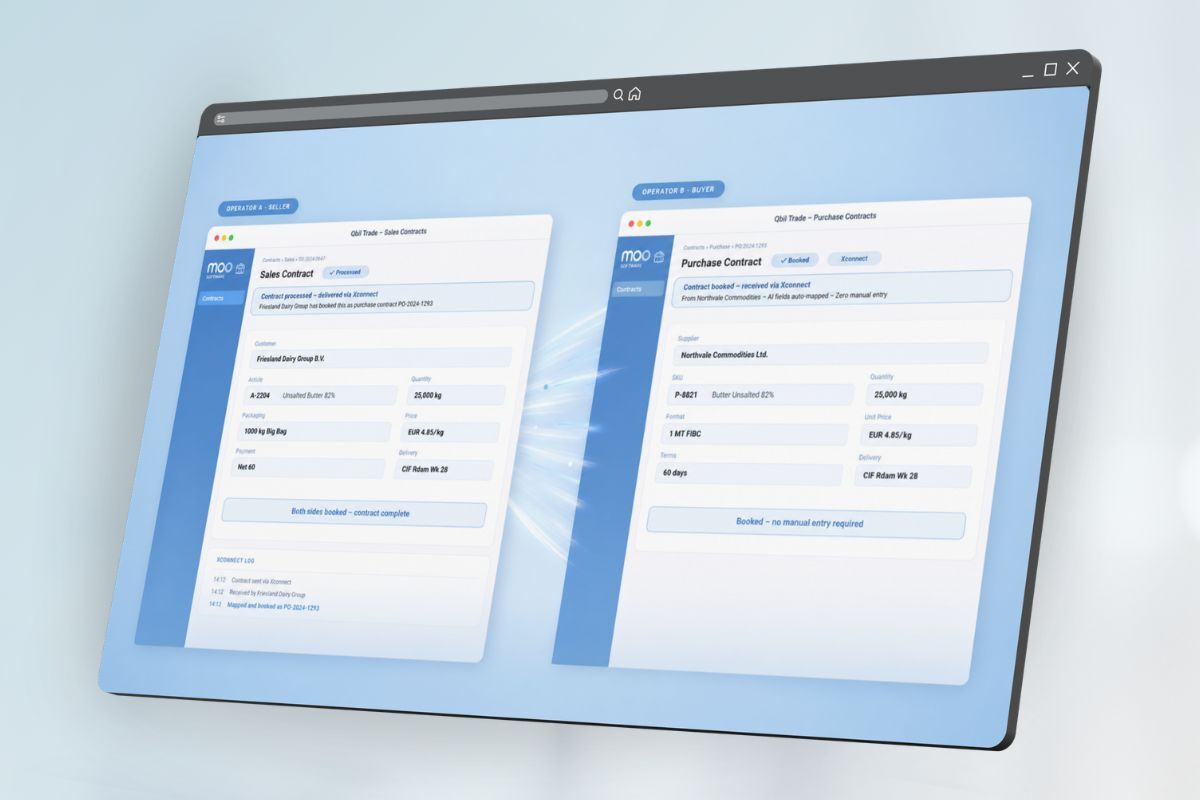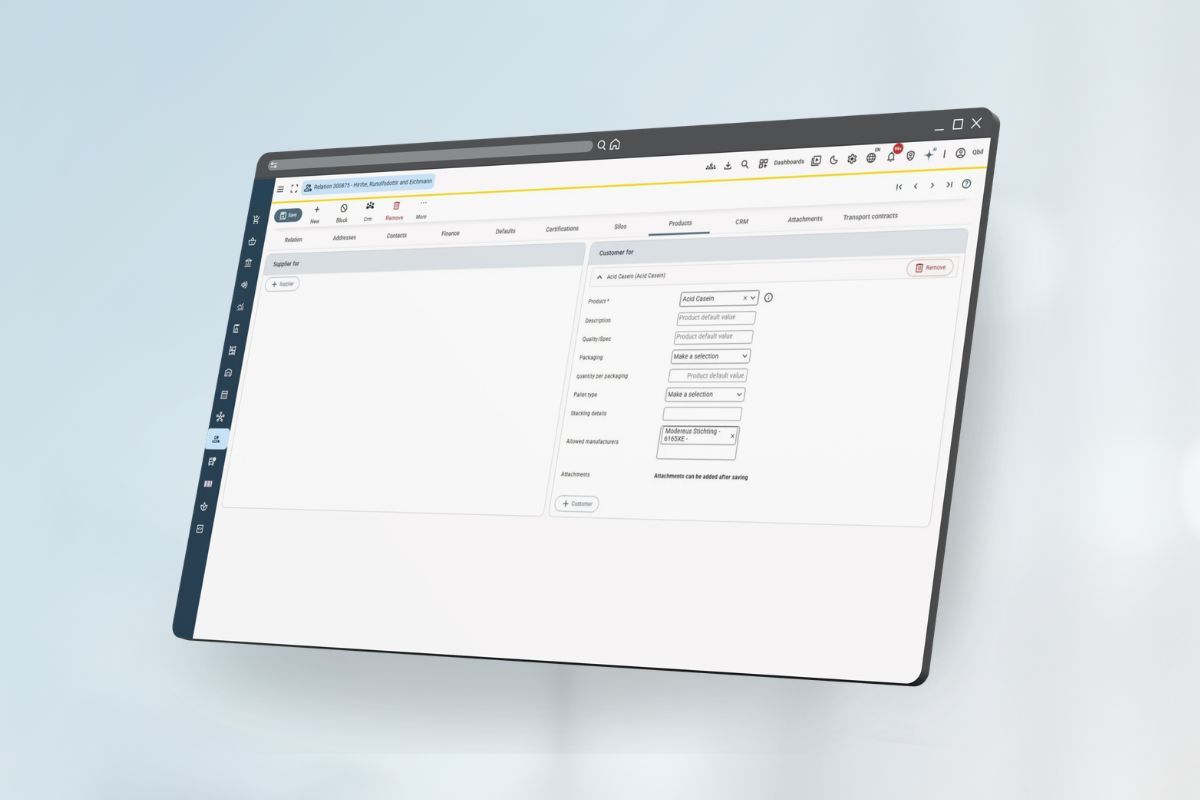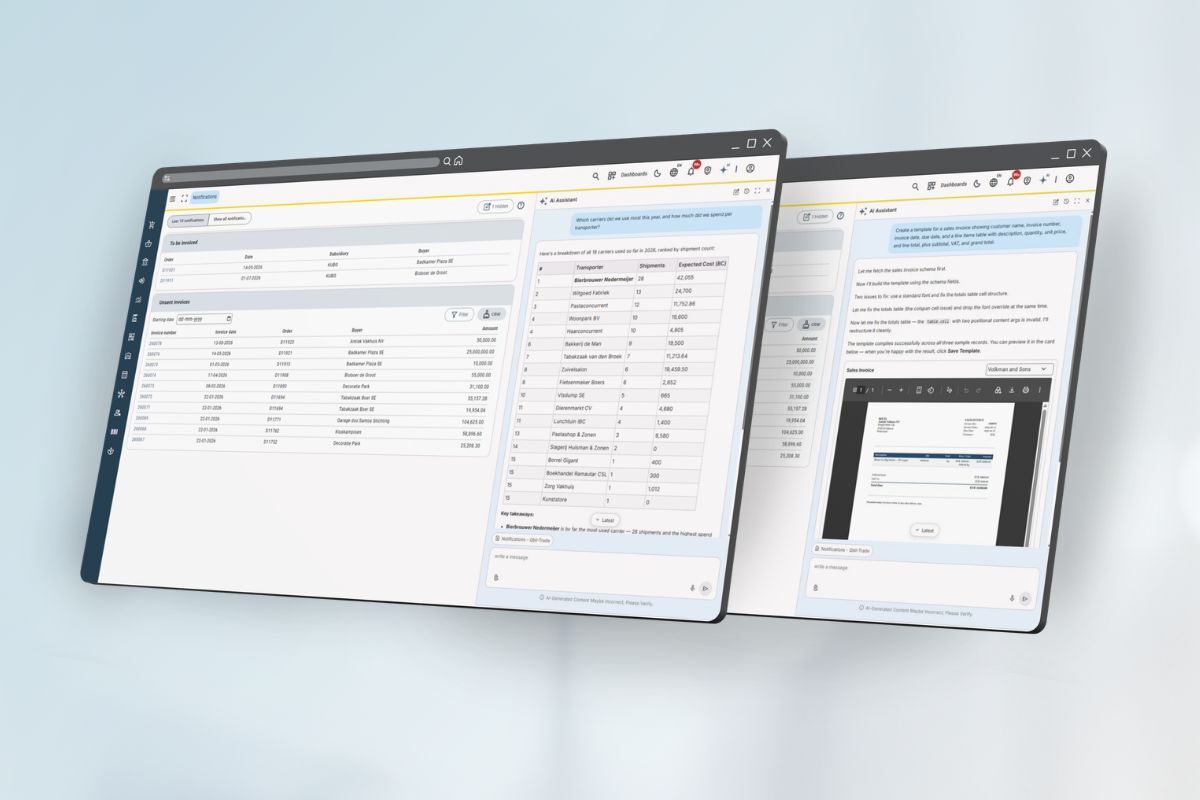







A dairy trading system should take between a few days and a few weeks to go live, not months. The exact timeline depends on the complexity of your trading operations, how much data you need to migrate, and whether your vendor has built their system specifically for the dairy and food ingredient sector. The sections below break down the real factors that shape your go-live date and how to tell a realistic timeline from an overpromised one.
What’s actually slowing down most ERP go-lives in dairy trading?
The most common reason ERP go-lives in dairy trading drag on is a mismatch between the software and the way the business actually works. When a generic system needs to be configured, customized, and extended just to handle back-to-back contracts, commodity positions, or dry matter calculations, every step takes longer and costs more. That configuration work is where timelines expand from weeks into months.
Beyond the software fit problem, a few other culprits consistently slow things down:
- Data that isn’t ready: Contracts, counterparties, and product specifications spread across spreadsheets and email threads take time to clean up and structure before they can be imported into any system.
- Unclear internal ownership: When no one person inside the trading company is clearly responsible for the implementation, decisions get delayed and momentum stalls.
- Scope creep during setup: Teams start adding requirements mid-project, which pushes the finish line further out with every new request.
- Integration complexity: Connecting a new ERP to an existing accounting system or logistics platform adds time, especially when the ERP vendor hasn’t built those connections before.
For dairy and food ingredient traders specifically, the sector’s own complexity adds pressure. Perishable inventory, volatile pricing, and multi-leg logistics all need to be handled correctly from day one. If the system requires heavy customization to support these realities, the go-live process becomes an extended consulting engagement rather than a straightforward setup.
How long does a dairy ERP implementation realistically take in 2026?
For a purpose-built ERP for the dairy industry, a realistic go-live timeline in 2026 ranges from a couple of days for a straightforward setup to four to eight weeks for a more complex trading operation. Generic ERP implementations at dairy companies have historically taken anywhere from six months to over a year, largely because of the customization required to make a non-specialist system fit the sector.
The gap between those timelines comes down to one core question: how much does the software already understand about your business before you start? A system built specifically for dairy and food ingredient trading arrives with the right data structures, contract types, and position logic already in place. A generic system starts from a blank canvas and needs to be taught what a back-to-back contract or a commodity lot even is.
Notre processus d'intégration et de mise en œuvre is designed to get trading companies fully operational within two days for the core environment, with additional configuration and training layered in from there depending on the size and complexity of the operation. That speed is only possible because the system is already built around the way dairy and food ingredient trading works.
What’s the difference between a fast go-live and a rushed implementation?
A fast go-live is one where the system is ready quickly because the software already fits the business. A rushed implementation is one where speed is prioritized over readiness, leaving gaps in configuration, user training, or data quality that surface as operational problems after launch. The difference is not about how many days the process takes but about whether the outcome is solid.
Signs that a fast go-live is genuinely fast rather than just rushed include:
- Users can complete their core daily tasks without workarounds on day one
- Historical data, open contracts, and inventory positions have been correctly imported
- The team has been trained on the workflows they will actually use, not just given a manual
- The accounting integration is tested and confirmed before go-live, not after
- There is a clear support path for questions that arise in the first weeks
A rushed implementation often looks fast on paper but generates a wave of support requests, manual corrections, and workarounds in the weeks that follow. For a dairy trading company, those problems hit hard because the business runs on tight margins and time-sensitive decisions. A missed invoice, a miscalculated position, or a logistics error in the first weeks after a rushed go-live can be expensive.
Which factors most affect how quickly a dairy trading system goes live?
The single biggest factor is how well the software fits your trading model out of the box. Beyond that, your internal readiness and the quality of your existing data are the two variables you control most directly. Vendors control the software fit and the implementation methodology. You control your data and your internal decision-making speed.
Here are the factors that consistently have the most impact on go-live timelines:
- Software fit: A system built for dairy and food ingredient trading needs little or no customization. A generic ERP needs significant configuration before it can handle commodity positions, quality specifications, or perishable inventory correctly.
- Data quality and readiness: Clean, structured data for counterparties, products, open contracts, and pricing migrates quickly. Messy spreadsheets and inconsistent records add days or weeks to any implementation.
- Number of integrations required: Connecting to one accounting system is straightforward. Adding logistics platforms, customs portals, or multiple bank feeds increases complexity.
- Internal decision-making speed: Implementations stall when key decisions about configuration, workflows, or data mapping require sign-off from people who are hard to reach.
- Team availability: The people who know the business best are usually the busiest. If the right people can dedicate time to the implementation, it moves faster.
- Scope of the initial go-live: Going live with core trading functionality first and adding reporting or advanced features later is almost always faster than trying to launch everything at once.
Should a dairy trading company go live all at once or in phases?
For most dairy and food ingredient trading companies, a phased approach is lower risk, but the right answer depends on the size of the operation and the complexity of the existing setup. A smaller trading company with a clean data set and a straightforward trading model can often go live with all core modules at once without significant risk. A larger operation with multiple product lines, complex logistics, and existing integrations benefits from launching in stages.
A practical phased approach for a dairy trading company might look like this:
- Phase one: Core trading operations live, including purchase and sales contracts, order management, and basic position tracking. This is the foundation everything else depends on.
- Phase two: Logistics and invoicing connected, with the accounting integration confirmed and tested in a live environment.
- Phase three: Reporting, advanced position management, and any additional integrations added once the team is comfortable with day-to-day operations.
The risk of trying to go live with everything at once is that problems in one area can block the whole business. The risk of an overly drawn-out phased approach is that teams continue relying on old systems and spreadsheets for too long, which creates confusion about which system is the source of truth. A well-structured phased plan sets a tight timeline for each phase and defines clearly when the old system gets switched off.
How do you know a dairy ERP vendor’s go-live timeline is realistic?
A realistic go-live timeline from a vendor is specific, conditional, and based on questions they have asked you. If a vendor quotes a timeline before asking about your data, your integrations, your team size, and the complexity of your trading operations, that timeline is a marketing number rather than a genuine estimate. A credible vendor will give you a range and explain what would push the timeline toward the shorter or longer end.
When evaluating a vendor’s timeline claims, look for these signals:
- They ask about your data before quoting a timeline. Data migration is almost always the most time-consuming part of any implementation. A vendor who doesn’t ask about your data quality isn’t accounting for it.
- They have a documented onboarding process. Vague descriptions of “working closely with your team” are not the same as a structured implementation methodology with defined steps and milestones.
- They can point to comparable go-lives. If a vendor has implemented their system for dairy and food ingredient traders of similar size and complexity, they should be able to describe what that process looked like.
- They are transparent about what is included. Does the quoted timeline include user training? Data migration? Integration testing? Or does it just cover getting the software installed?
- They explain what could delay the timeline. Honest vendors name the risks upfront. If everything sounds frictionless, ask directly what has caused delays in previous implementations.
If you want to understand what a realistic timeline looks like for your specific trading operation, the most direct way is to walk through your setup with someone who knows the sector. You can get in touch with our team to talk through your situation and get a clear picture of what implementation would actually involve for a business like yours.
Foire aux questions
How should we prepare our data before starting a dairy ERP implementation?
Start by consolidating all counterparty records, open contracts, product specifications, and pricing history into a single, structured format — ideally a spreadsheet with consistent field names and no duplicate entries. Identify who owns each data set internally and assign one person to sign off on the cleaned version before migration begins. The cleaner and more complete your data is before day one of the implementation, the faster and smoother the go-live will be. If your data is scattered across email threads and legacy systems, budget extra time for this step — it is almost always the longest part of any implementation.
What should our team actually be doing during the implementation period?
Your internal project lead should be available to make configuration decisions quickly, validate data mappings, and coordinate access for the vendor’s implementation team. Key users — the traders, operations staff, and finance team members who will use the system daily — should be involved in hands-on testing of their specific workflows before go-live, not just given a training session afterward. Keeping senior decision-makers reachable for sign-off on edge cases is also critical, since delayed approvals are one of the most common causes of implementation slowdowns. Think of the implementation period as a focused sprint, not a background task.
What are the most common mistakes dairy trading companies make in the weeks after go-live?
The most common mistake is continuing to run parallel processes in spreadsheets or the old system “just in case,” which quickly creates confusion about which system holds the accurate position or the correct contract status. A second frequent mistake is not logging support questions and workarounds systematically — if users solve problems informally without reporting them, the vendor cannot address root causes and the same issues keep recurring. Finally, companies often delay finalising the accounting integration in a live environment, which means manual reconciliation work piles up in the first month. Setting a firm cutover date and sticking to it is the most effective way to avoid all three.
Can a dairy ERP handle both physical trading and financial positions in the same system?
A purpose-built dairy and food ingredient trading system should handle both within the same environment, linking physical contracts directly to commodity positions so that your exposure is always calculated from live trading data rather than manually updated spreadsheets. This is one of the clearest differentiators between a sector-specific system and a generic ERP that has been configured to approximate trading functionality. If a vendor cannot demonstrate how physical back-to-back contracts flow through to position management in a live demo, that is a signal the integration between the two is not as seamless as it appears. Always ask to see the position screen update in real time as a contract is entered.
How many people do we need to dedicate to the implementation on our side?
For most small to mid-sized dairy trading companies, one internal project lead with decision-making authority is the minimum requirement, supported by one or two key users from trading, operations, and finance who can validate workflows and data. You do not need a large internal project team, but the people involved need to be genuinely available — not pulled in between other priorities. The implementation will move at the pace of your slowest decision, so having the right people reachable and empowered to approve configuration choices is more important than having a large team. Discuss availability expectations with your vendor before the implementation starts so both sides are aligned.
What questions should we ask during a vendor demo to assess whether their go-live timeline is credible?
Ask the vendor to walk you through a recent implementation for a dairy or food ingredient trading company of similar size and describe specifically what took the most time and what they would do differently. Ask what is and is not included in the quoted timeline — whether it covers data migration, user training, integration testing, and post-go-live support, or just software configuration. Request a written implementation plan with defined milestones rather than a verbal commitment. Finally, ask what has caused delays in previous go-lives and how they were resolved — a vendor who can answer that question honestly and specifically is one who has actually done this before.
Is it possible to add more users or product lines after go-live without disrupting operations?
With a well-architected dairy trading system, adding users, product categories, or additional trading desks after go-live should be a configuration task rather than a development project — it should not require downtime or a secondary implementation. This is worth confirming explicitly with any vendor before you commit, since some systems require significant re-configuration or even re-implementation to accommodate meaningful growth. A phased go-live strategy actually makes this easier: by launching core functionality first and expanding later, your team builds confidence with the system before taking on additional complexity, and the vendor already understands your setup when the time comes to extend it.